“Take me for a walk in your country, so I can understand why you call me that name, Peasant.”
Community is a complex concept—which concept isn’t?—but if it exists as a thing, and not just as a term used for political or economic advantage, it must have boundaries: it is both inclusive and exclusive. That the world is complete is a common way of looking at things.
Out here, and in here, I use the term ‘country’, borrowed, without permission but with profound respect, from its usage by the warriors and wanderers (as I perceive them) of Australian Indigenous culture, to signify a reality without boundaries, impervious to political and economic definition.
Peasants are they who belong to a community by virtue of their acquiescence in a political and economic system, but who, by the nature of their work, their intimate knowledge of the seasons of hot and cold, the transient and anonymous life-cycles of their animals, and the motions of the sky, stand at the boundary of community, where ‘who are all in this together?’ is as idle and meaningless a question as ‘who owns this country?’ So a peasant does not ask questions.
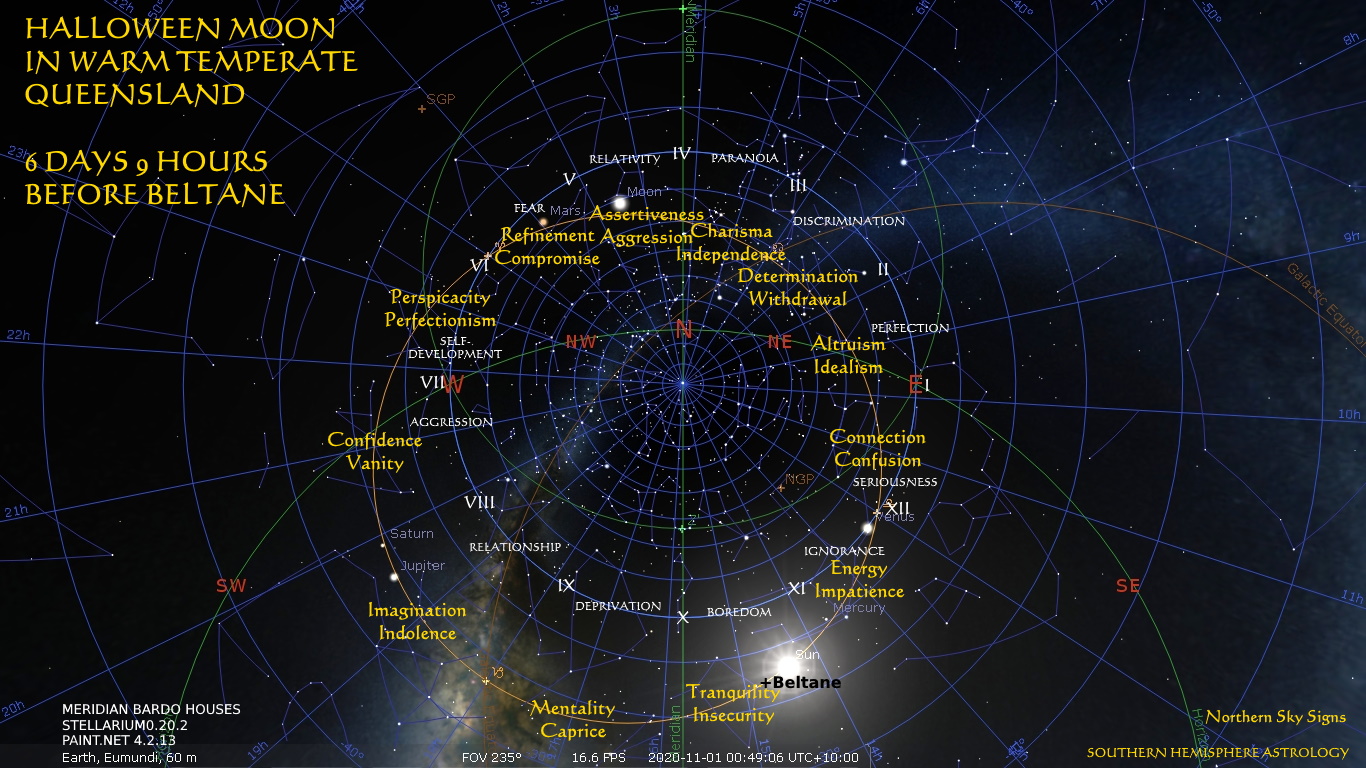
Country is no more nor less than territory’s transcendence of its map. Who among us lives harmoniously without maps? We are all peasants, and particularly when we celebrate the dead at Halloween, when Spring is bursting into Summer, and we should be celebrating Beltane, garlanded with flowers. Does the Queensland election portend Summer or Winter? Trick or treat, indeed!
“So I am possibly at a time of enlightenment?”
Maybe. Unless our heads are in the sand, or we are called, or it rains. Or a stranger comes.
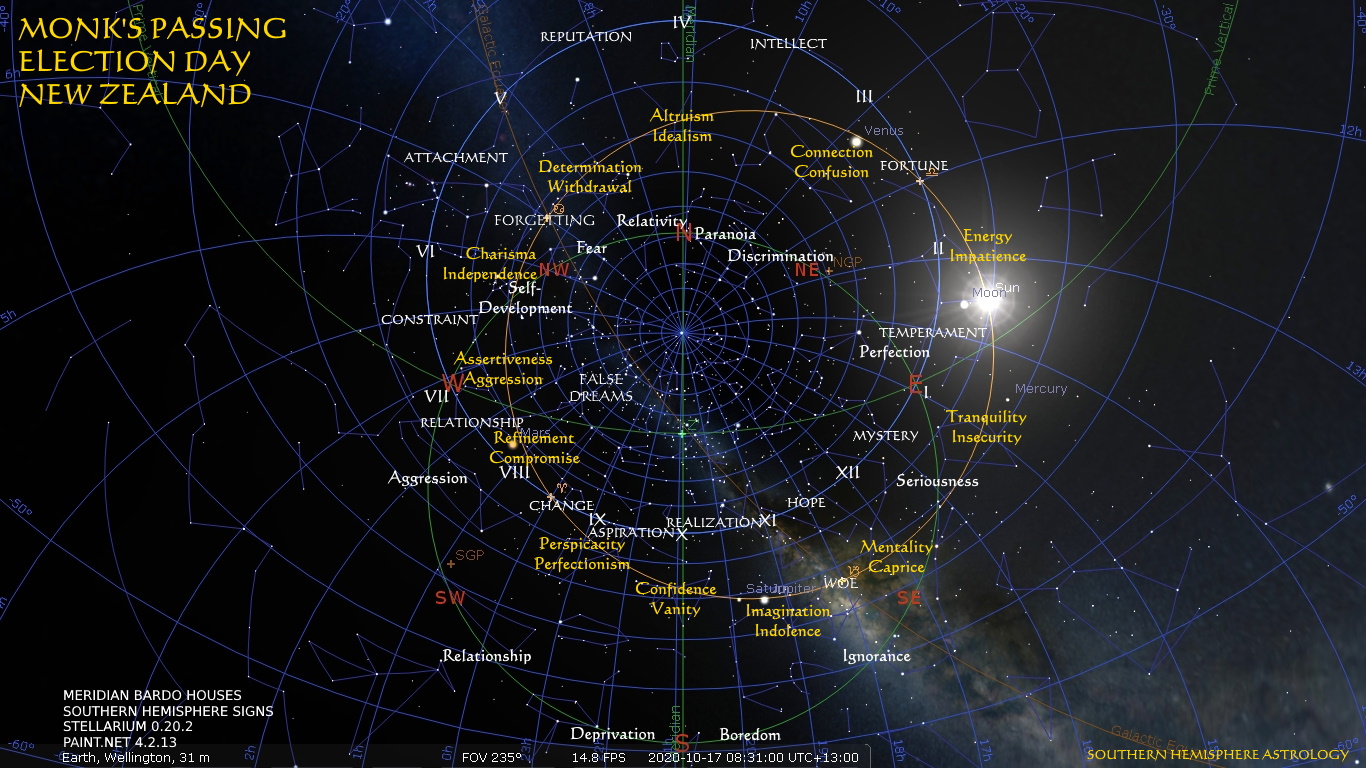
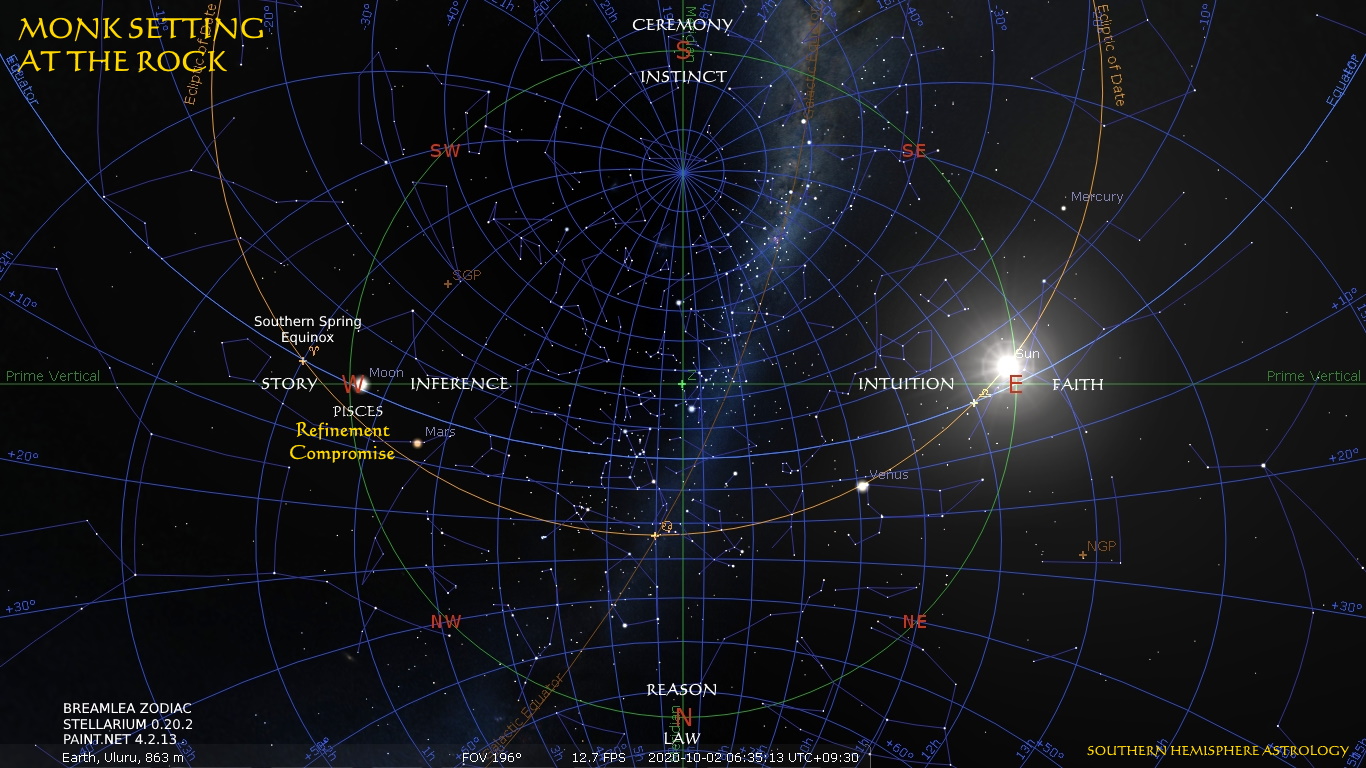
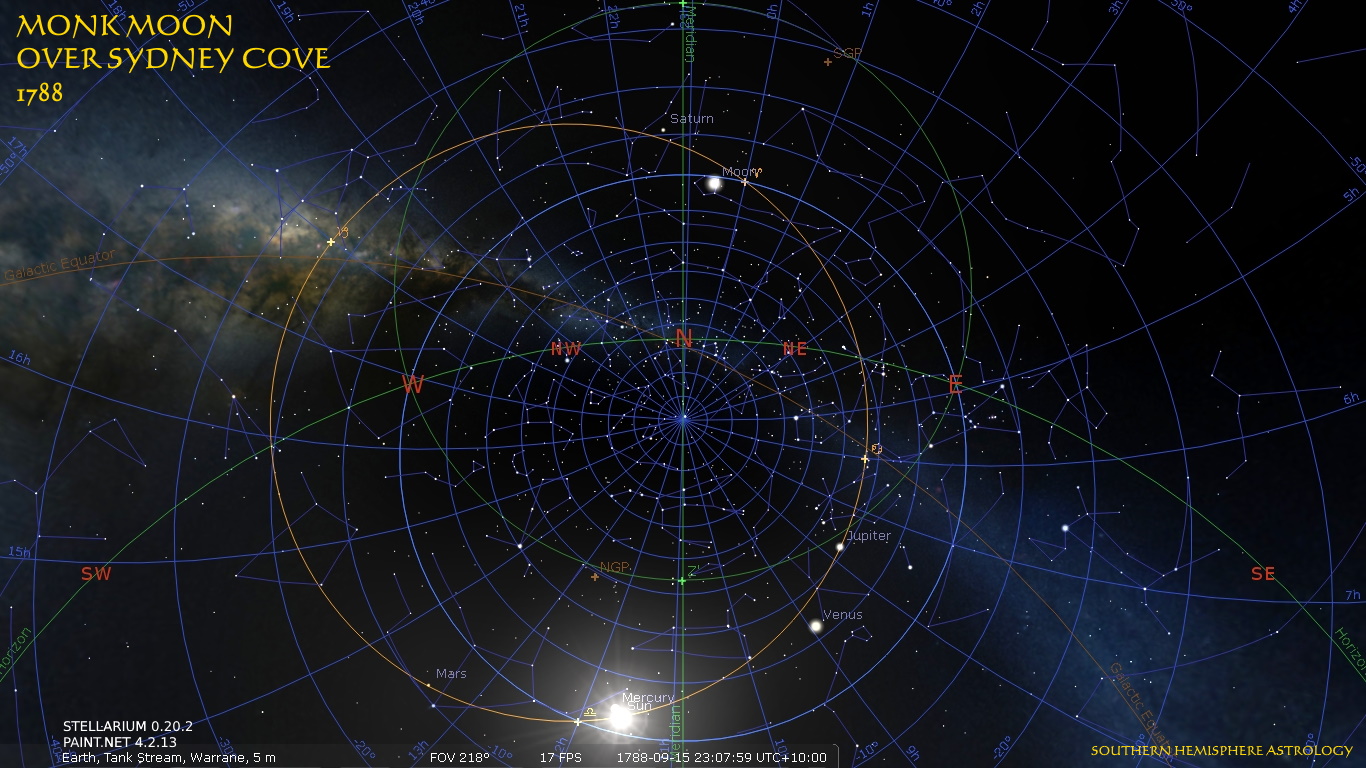
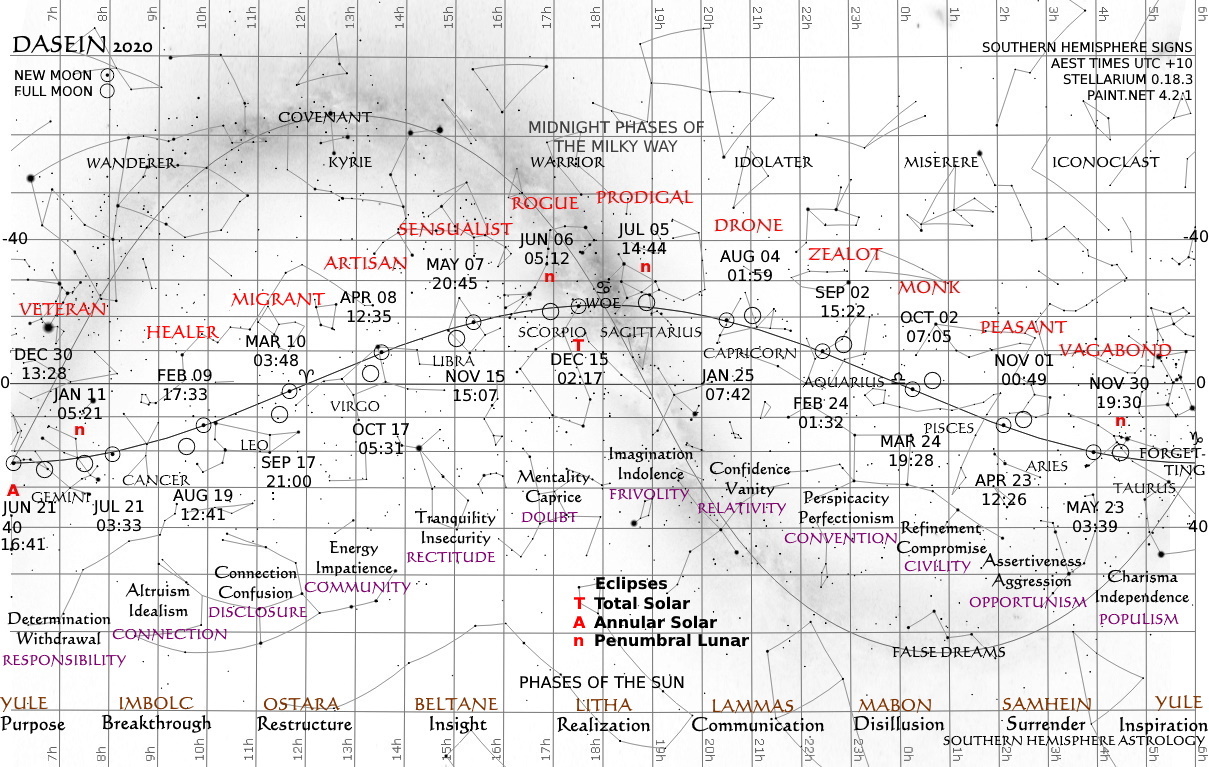
Conquerors and social organisers have always been with us, but so has the imaginative Moon, encouraging the integration of mind, body and spirit. Near the Autumn Equinox of the Northern Hemisphere, where it is known as the Harvest Moon, the Monk Moon travels the valleys in the proximity of the high country of the Circlet Of Pisces, signalling the time for the herds to come down for the winter, and exhorting the blessed to share preparations for hard times with the less-fortunate.
Around the dawn of the Current Era, the Moon noticed that the proper motion of the stars behind him when the Earth was directly between him and the Sun in Leo had formed a circle. At that time, as Greece and Rome flourished, the inner voice of the gods’ authority was beginning to lose its grip on the human psyche, and the Moon was eager to symbolise the new spiritual age. He chose the Crown of the Circlet of Pisces.
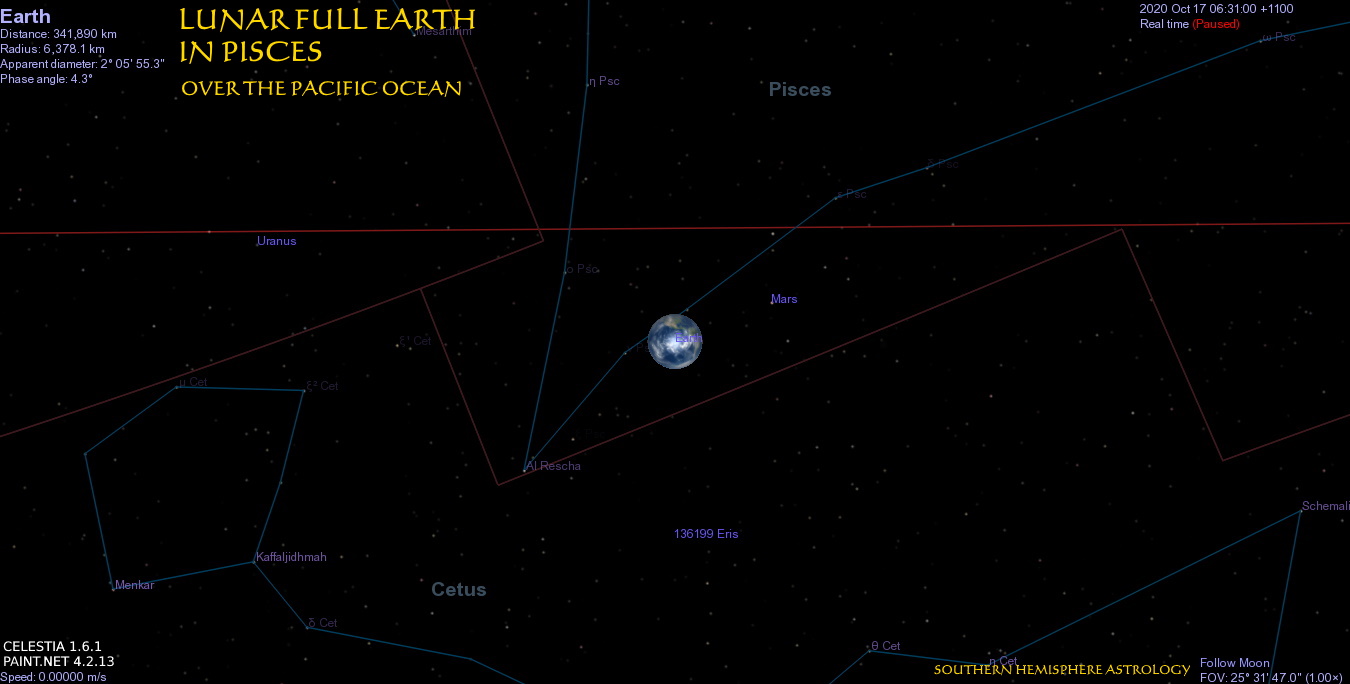
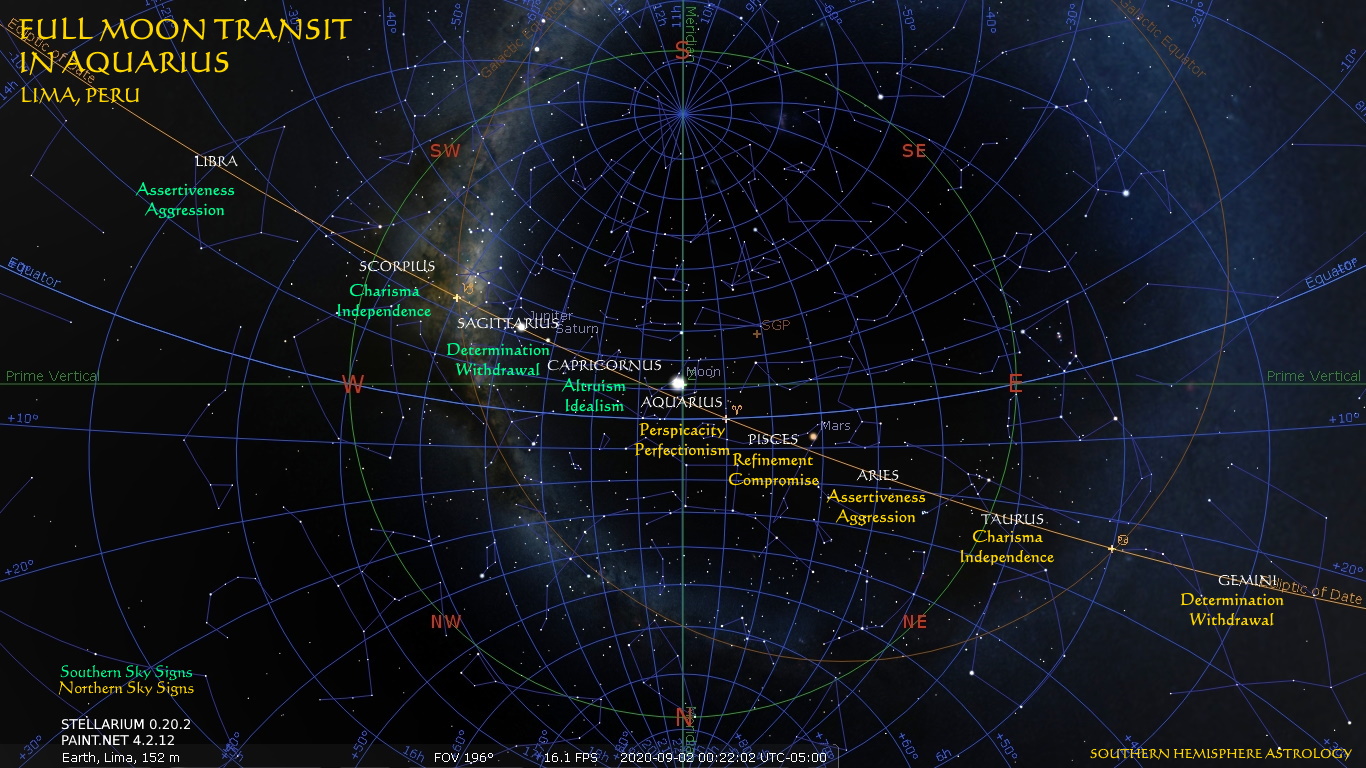
Every nineteen years—the Metonic Cycle—for about 150 years, there it appeared to Earthlings, whether they were believers or not, receiving for their edification a heavenly crown. Unfortunately, this phenomenon of individuality outshining its grace, we might say, depends on the relative positions of Sun and Lunar Nodes—one goes forwards through the Zodiac and the other backwards—and for its impact, on observer latitude; and of course the moment of full moon must be visible overhead at night. The ecliptic latitude of the Circlet centre is +6º, which the Moon, let alone the Full Moon, only gets to with the help of parallax in the northern sky of the Tropics and the Southern Hemisphere.
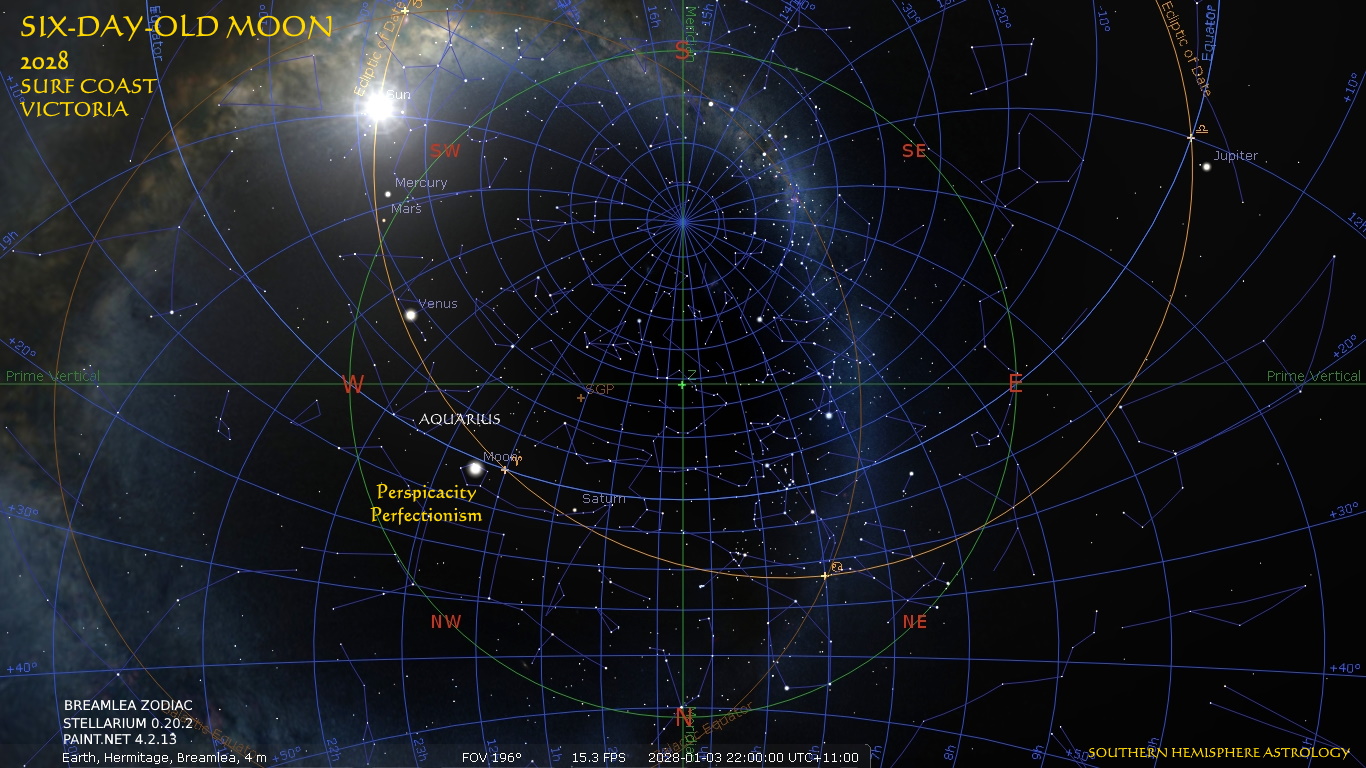
In short, the Monk Moon offers only a tenuous sense of human immortality—but look for it in other guise before First Quarter when the Southern Descending Node (Northern Ascending), which is in Taurus now, working its way backwards at the rate of a constellation every 18 months or so, is near Sagittarius, for example at nightfall in 2028 on January 3. (You’ll need a dark sky, or binoculars, to see the Circlet.)
Furthermore, history records many occasions when the benefit of a Full Moon in the Circlet must be called into question. The glorious bloom of Romanticism, which occurred during the cycle of 1693-1845, coincided with the invasion of Australia.
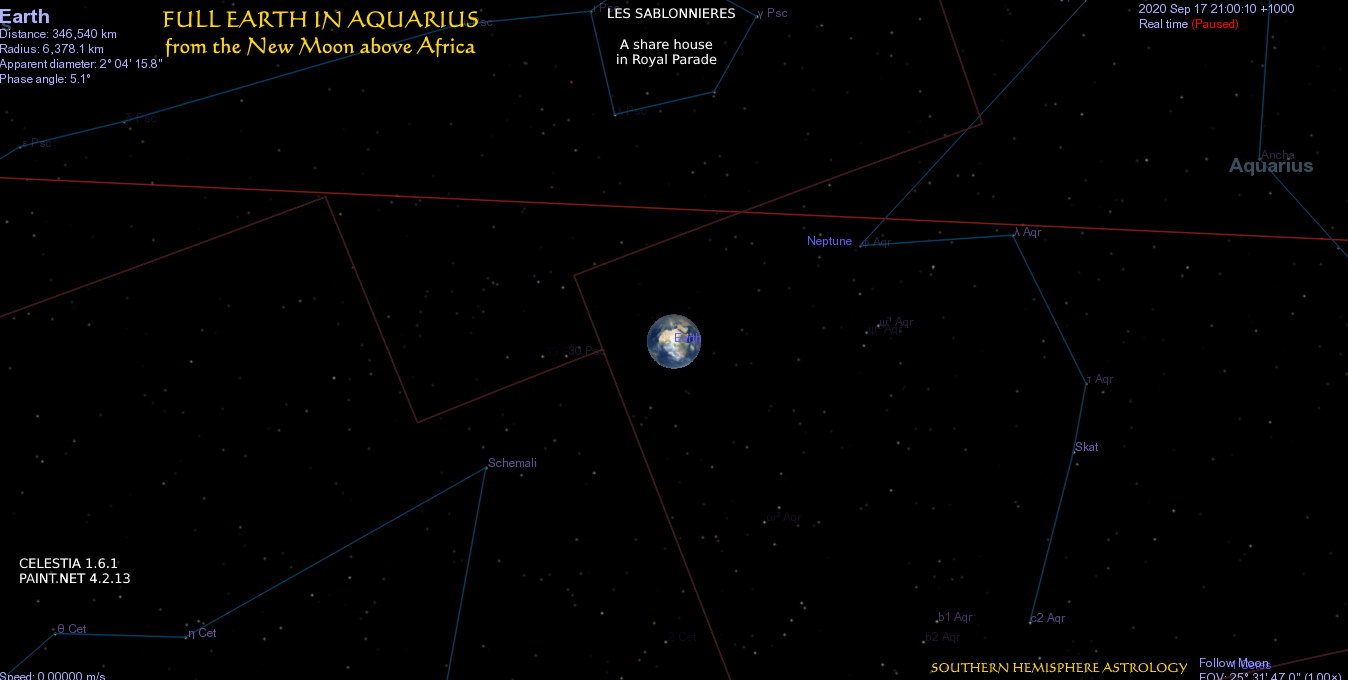
The sentimental purloining of the Circlet in these pages to locate the lost love haunting the ruin of “Les Sablonnières”, the publication of Le Grand Meaulnes in 1913, and the death of its author in the First World War, have taken place during horrific times between cycles. This may have given the Moon an excuse for eschewing the weight of the crown. Perhaps, in these intervening centuries, he is doing battle with his uselessness, his privilege, his masculinity and his ego. I wonder, in this time of global pestilence and environmental destruction, what Earth the next Full Moon in the Circlet will bathe in 4-500 years, in this flux we call the Universe. Is the glass half-full or half-empty?
You cried, and I did not know how to comfort you, with your young body dressed in shortie pyjamas pressed to mine. You sobbed, I am not a virgin. At last, dear kind friend, I know, because I am not a virgin either, no matter how hard I try.
Every night when the Sun goes down I follow it, in search of my innocence. The stars outside are unconscious beacons of my experience, and they carry vestigial names from other times or intuitions in my own past. But the night sky is a cloak of experience thrown over something more intangible, a kernel perhaps of me as I am in my intention, not as I am in my responsibility.
Who is more ridiculous, the one who labours all the critical day longing for night, or the one who tosses and turns in his bed longing for the morning to straighten his load?
It is time I took my leave. Prolonged isolation has taken its toll on my hippocampus. Memory has become a stranger to any task put before it. I have no idea of the way forward, since it leads from wherever ‘here’ may be. You don’t need me to see straight; only you can transform nowhere.
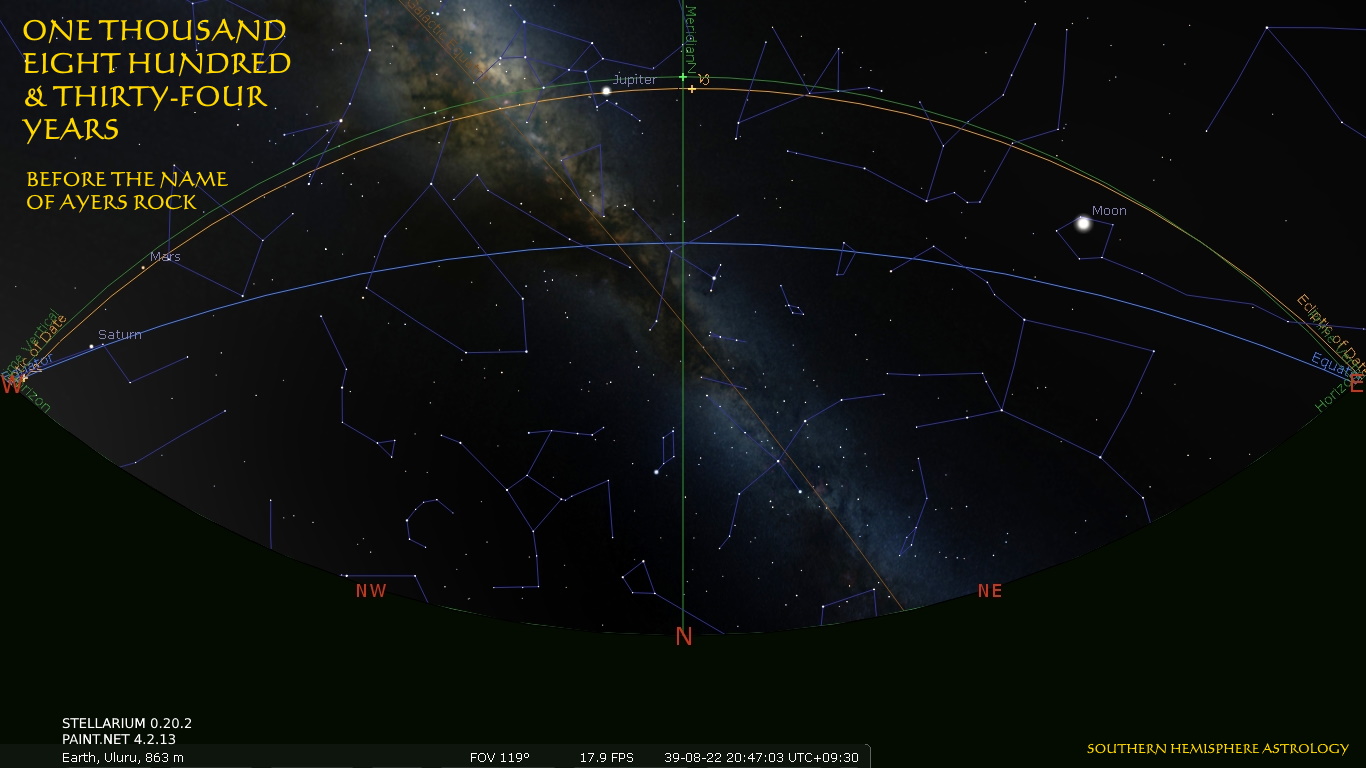
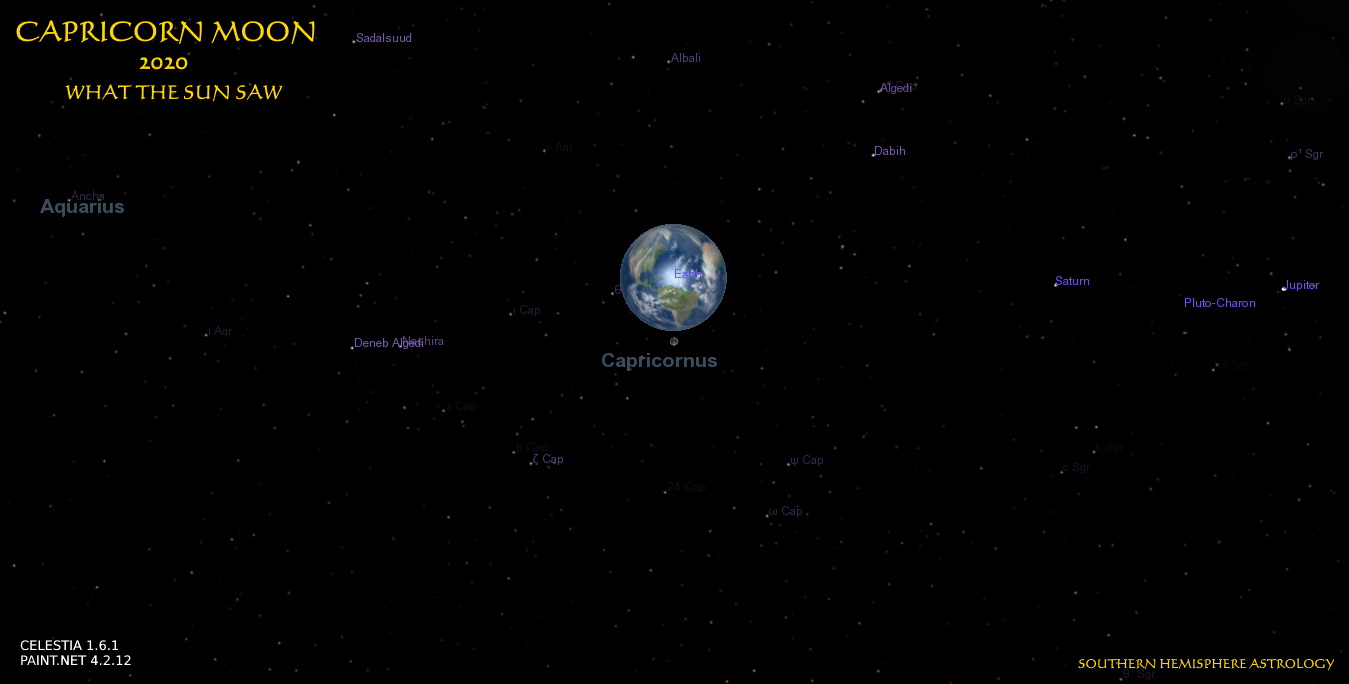
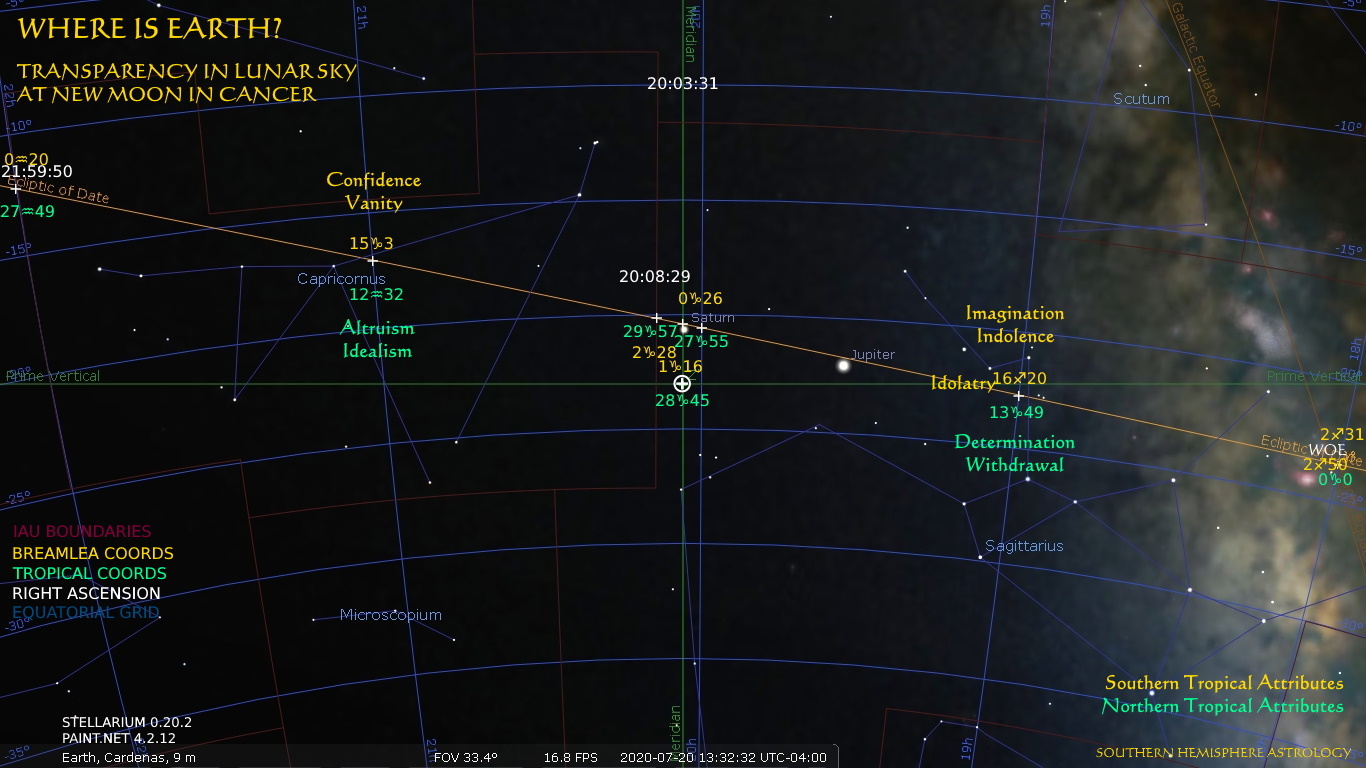
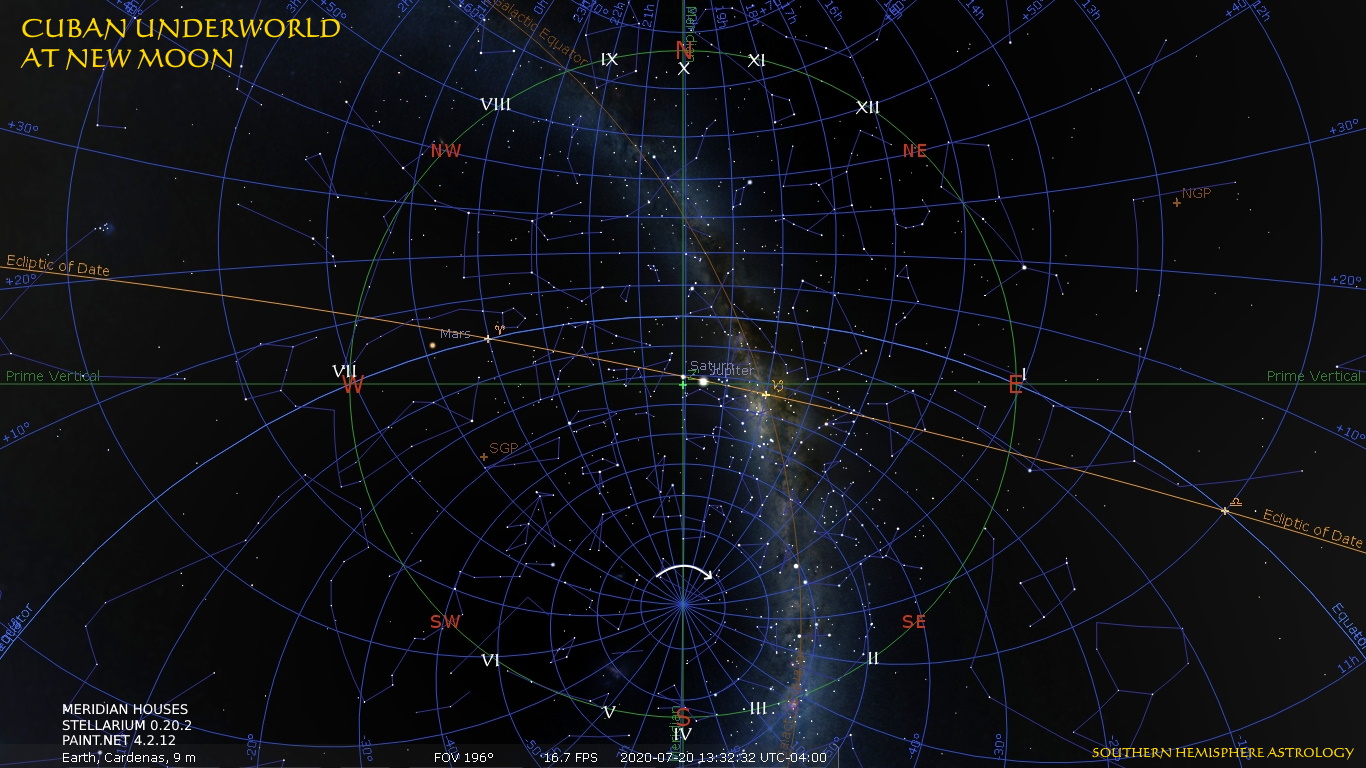
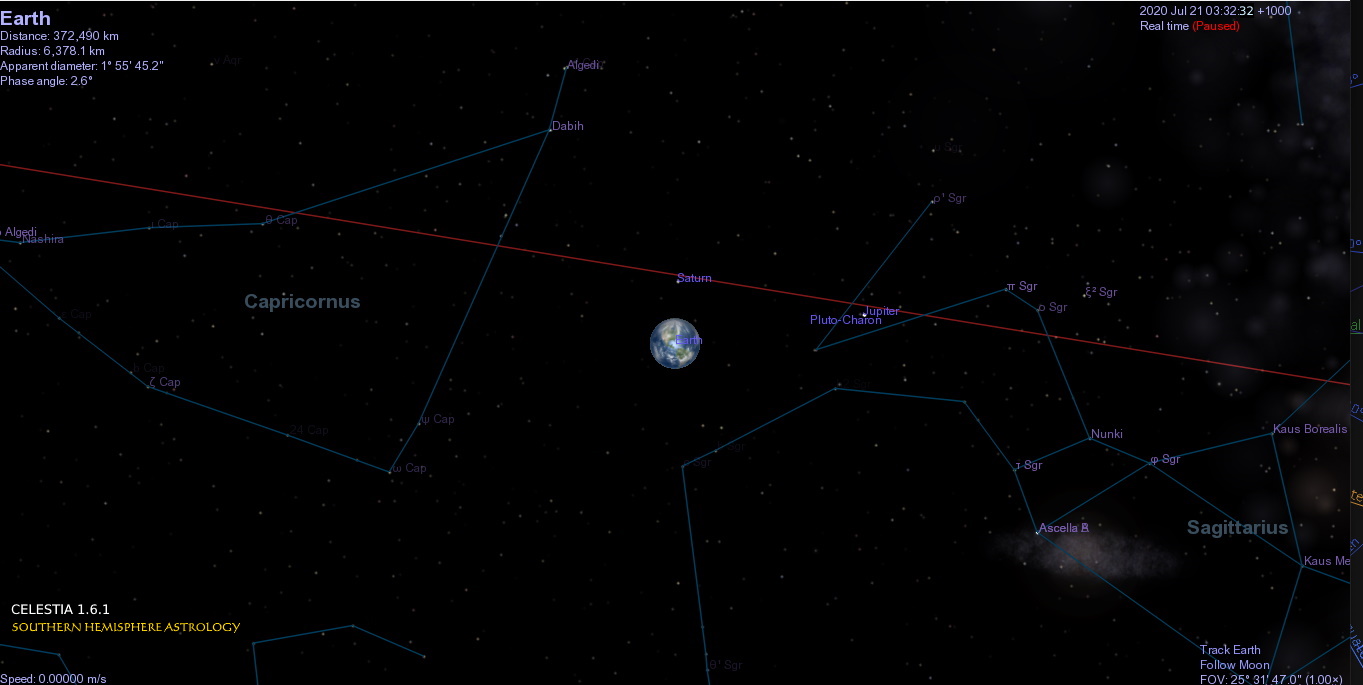
There is a sign coming, which may yet unite us, offer a focus for our combined wayfaring instincts and a harmonious engagement of innocence and experience, intention and judgment. Jupiter is closing the gap on Saturn, and will overtake it in Capricorn at the end of the year in a single flare of light. The Sun in Sagittarius will be rounding on both, and so the conjunction will be visible low in the West, just where you would expect to witness the smothering of inconsequentiality. Will you look?
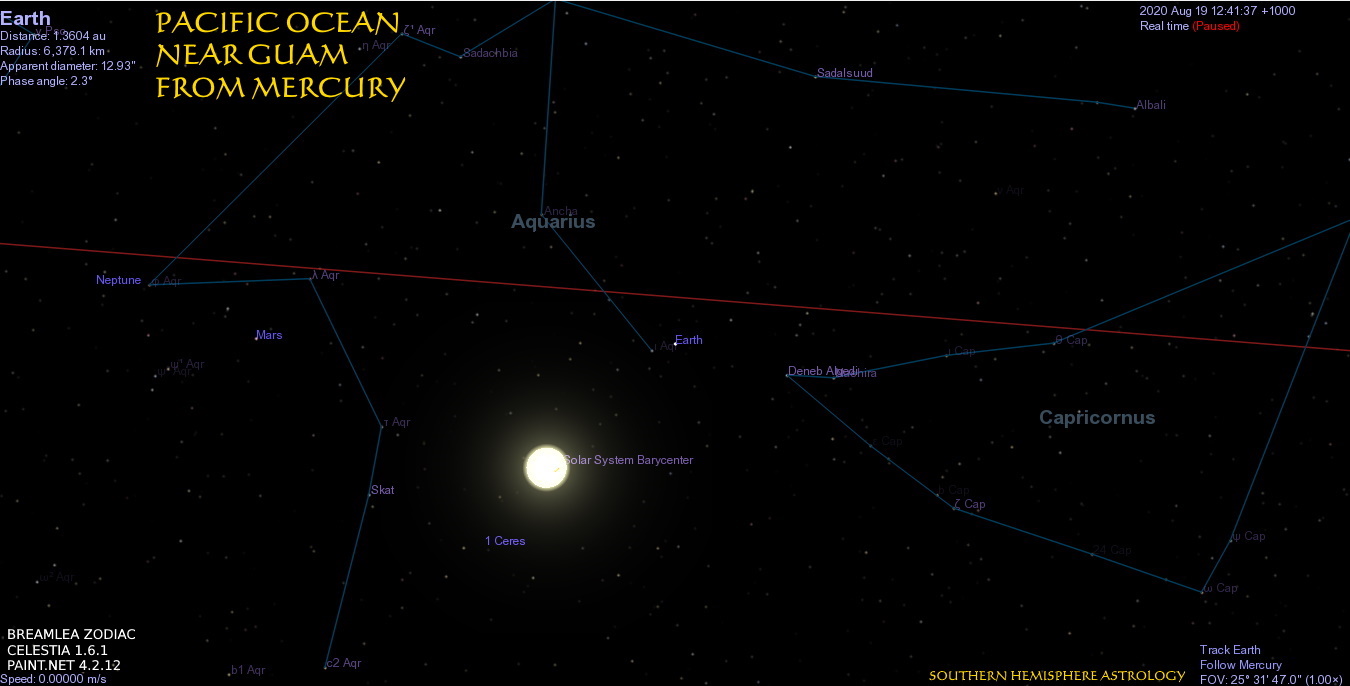
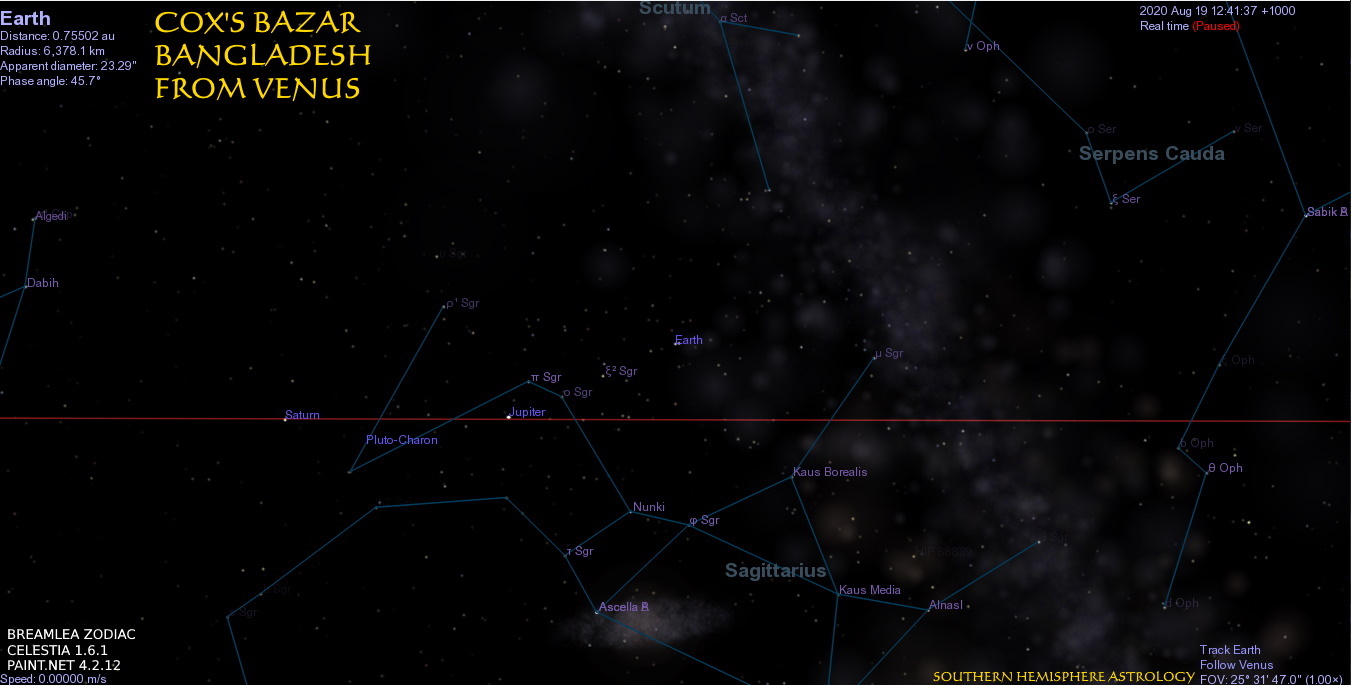
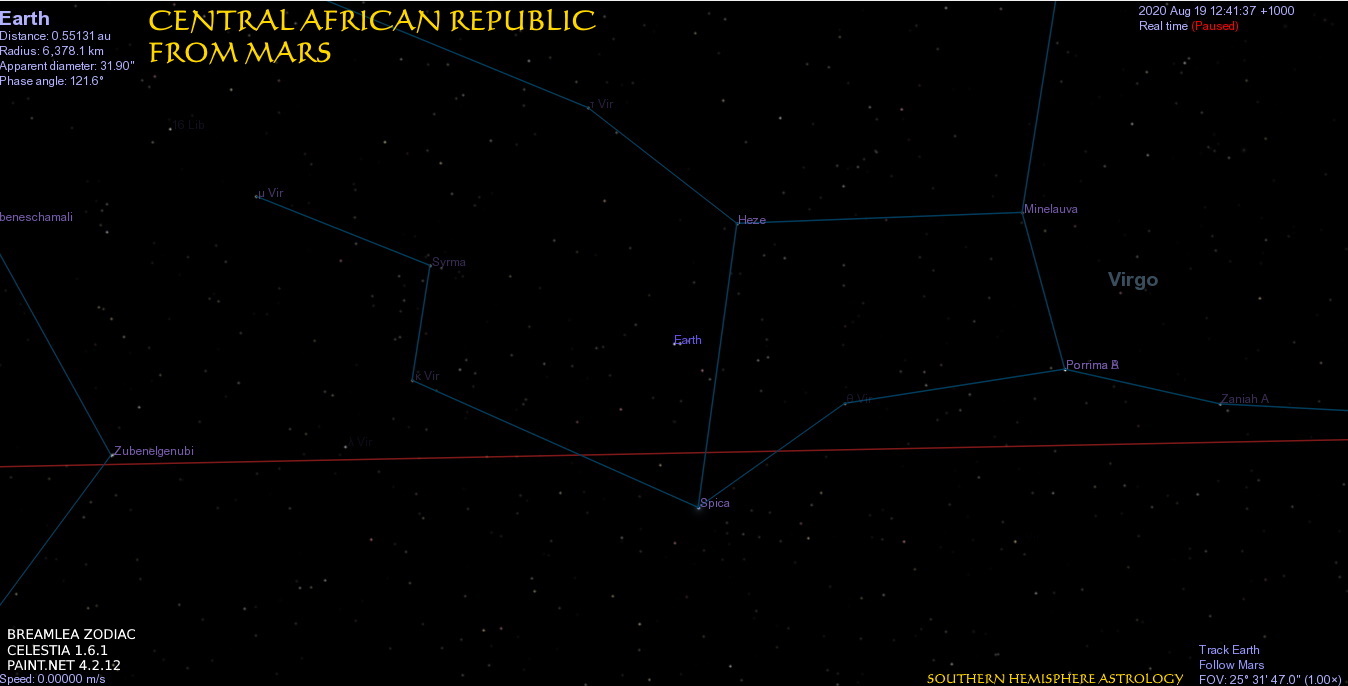
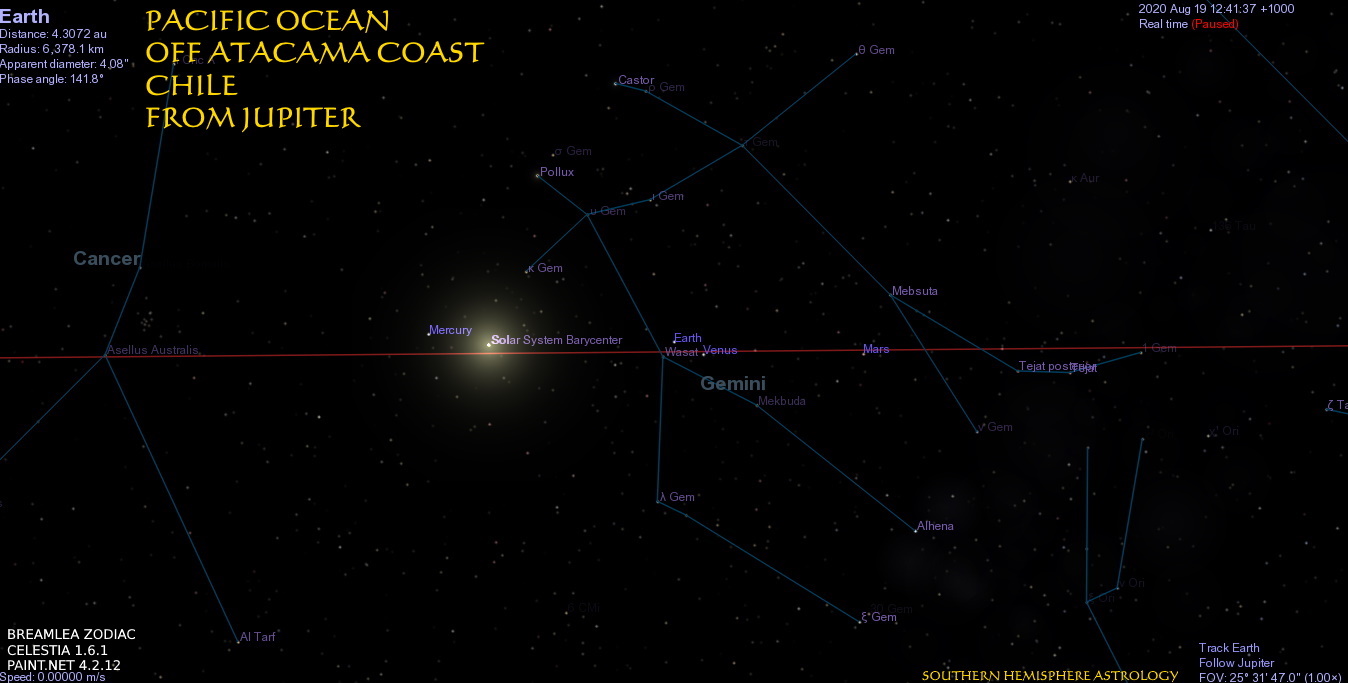
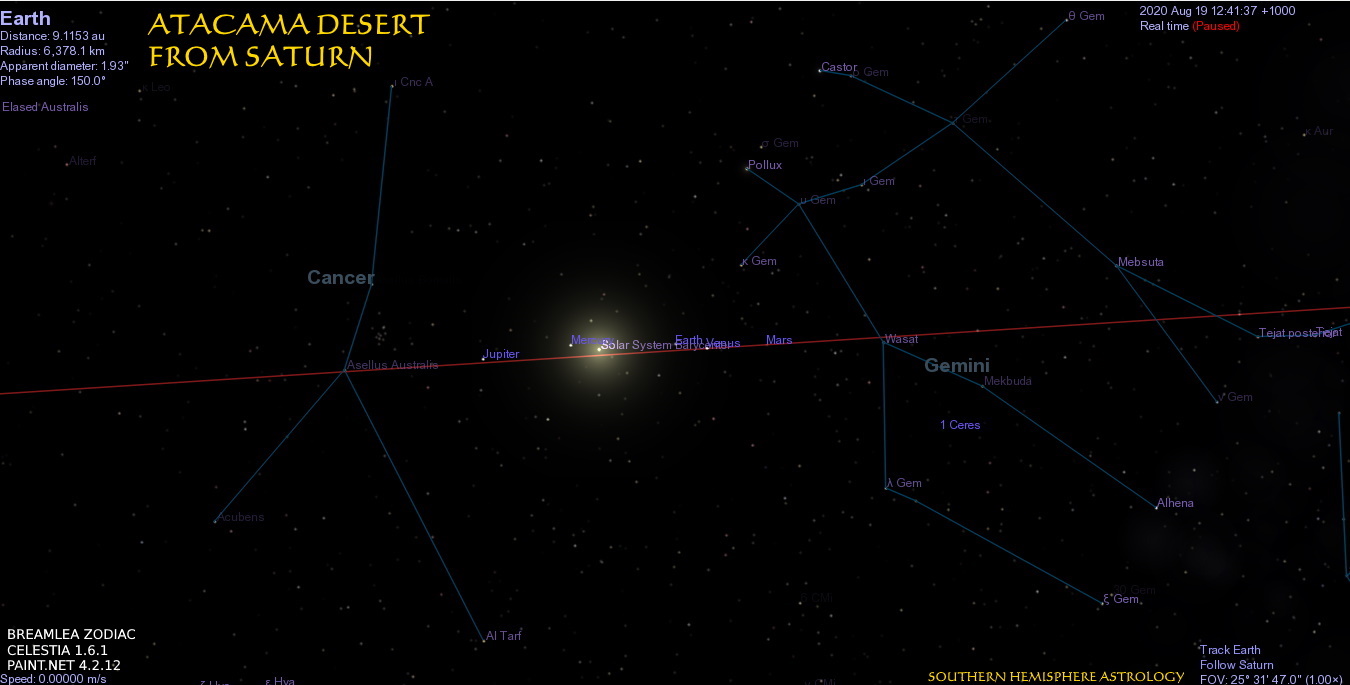
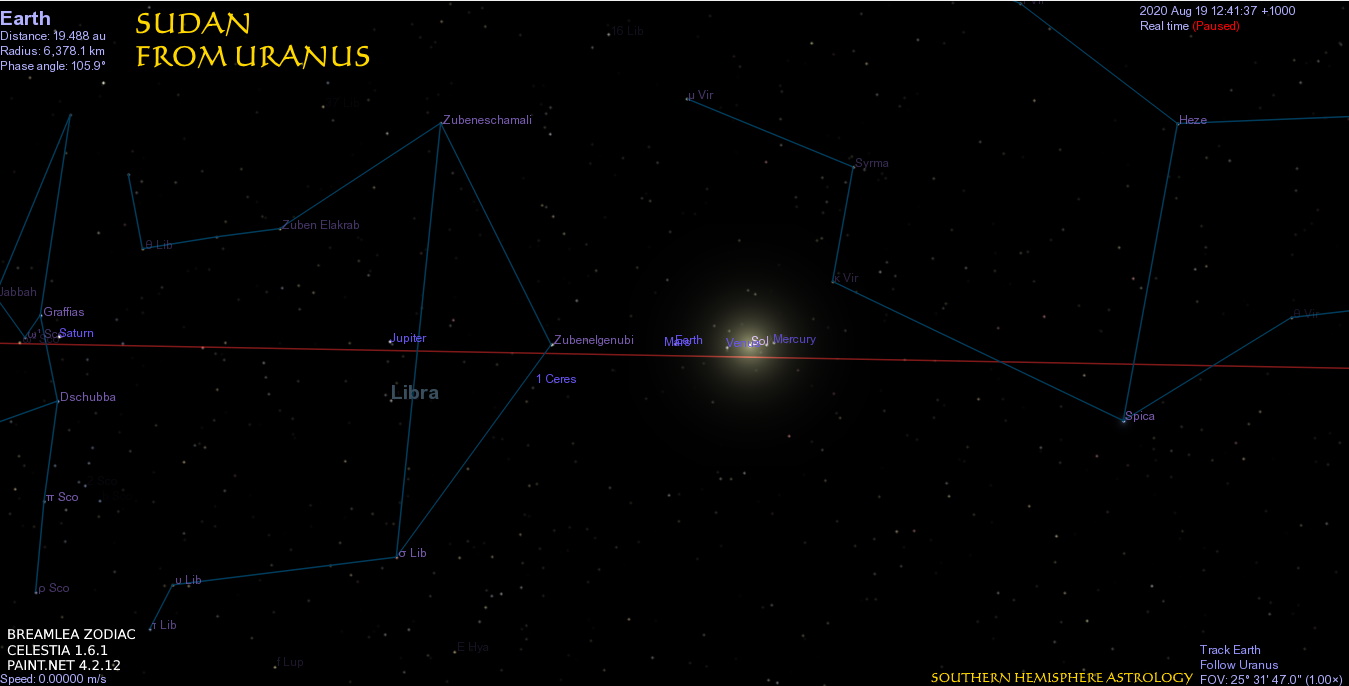
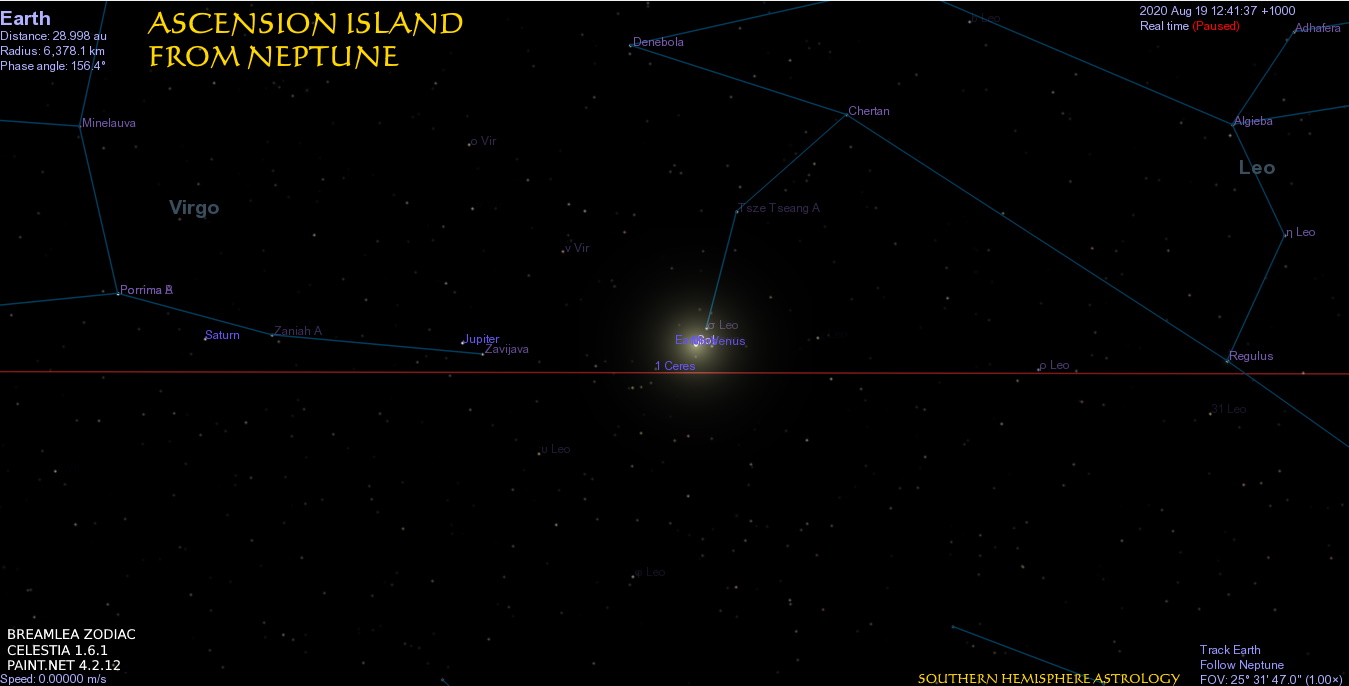
At last, what difference does it make if Sun and Moon swap signs? If the Constellations of the ancient Zodiac retrieve their mythical identities from the precession of the seasons which we have destroyed anyway? If grief or anger will hold sway tomorrow and tomorrow and tomorrow? If it’s all confirmation bias and could not possibly be influenced by solar system orientation to the stars when that’s all relative, and every celestial body’s view of every other’s background is strikingly different? If the only thing you can say for certain is that you’re opposite on the Zodiac to whomever you’re looking at, and they signify nothing?
Is there a place to be other than at the centre of attention? Or, rephrased, why should you be the only one who doesn’t exist?
I could never resist one last question. Cheers, Zealot, nice to catch up, even if it does seem only once in a blue moon. You probably get this all the time?
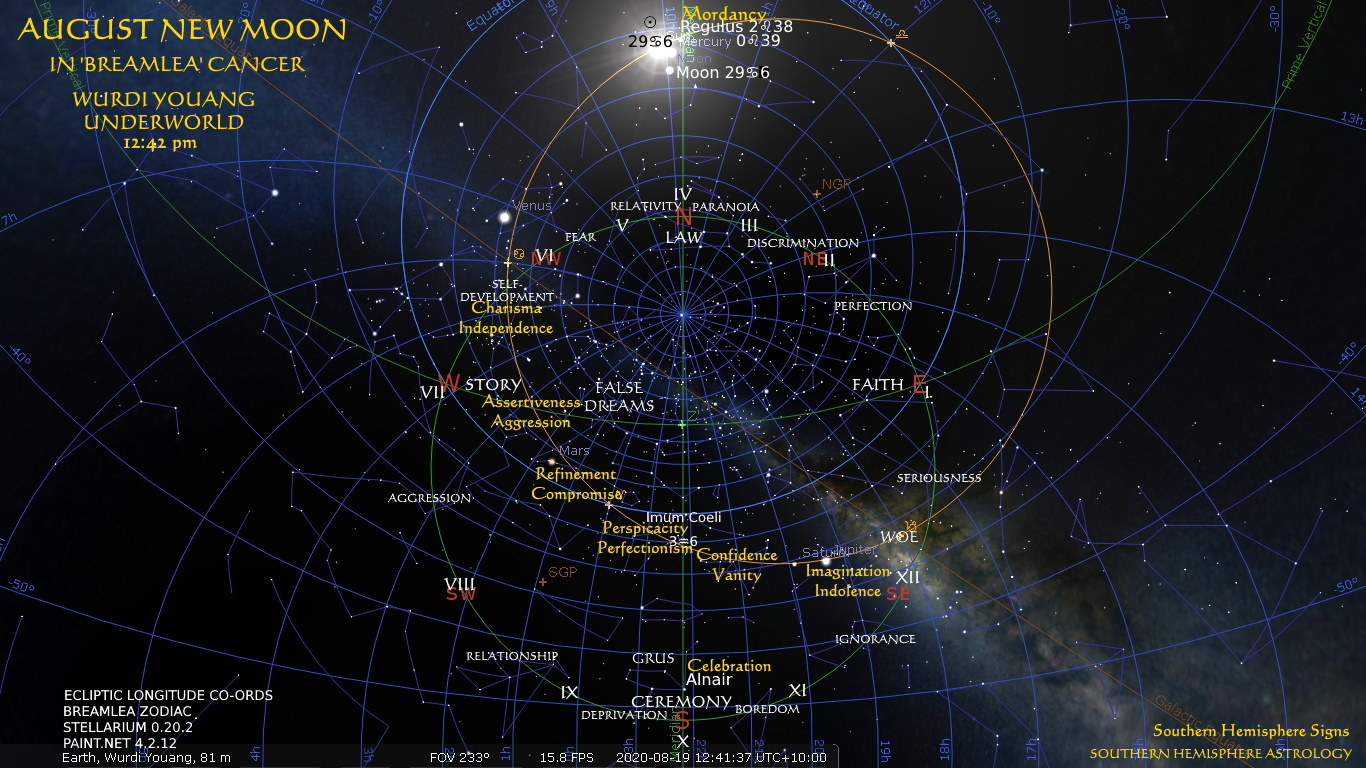
The cusp of Leo: connection and disclosure, relativity and faith, altruism and irony. Regulus Gate: the heart of the lion and the anus of the possum, gratuitous, almost alien, postmark of a trivialized celebration of separate togetherness. Or perhaps it presents a simple gesture of togetherness comprising a ceremonious underworld revelation to sarcasm that its defences are less than fun? It is certainly pure coincidence, isn’t it, like all the star names and attributes I have invented, and for that matter, the entire corpus of astrology, though it prefer the term synchronicity?
I am reminded of an event in the life of a friend of mine, an ageing and obscure writer who somehow managed to be invited to address a seminar on something or other in a faraway place. To cut a long story short, he got hopelessly and helplessly lost: people kept telling him to turn around and go back the other way, pointing to roads and railway stations he either couldn’t find, or always took him the wrong way.
He became separated from his luggage, which not only contained the text of his talk, but the names and phone numbers of the connections he desperately needed to contact with an explanation of his non-appearance. While he was confronting the senile reality of his circumstances he came to find himself adjacent to a woman on the phone on the same railway platform.
He overheard her conversation about a writer who inexplicably had failed to appear at a seminar, and realised that this was his chance. Then he heard her describing the weird eyes, not exactly dead, but decayed in the most disturbing way, of a man sitting not far away from her.
The rest is history, but my friend never found his luggage and never made it to the seminar. With the help of many people, he eventually made it home, but he was plagued, and still is, by the impossibility of describing to any of the purposeful bystanders who guided him, or to anyone since, the awesome impact of the coincidence which improbably answered his need on that railway platform in the middle of nowhere.
We all know the powerful influence of a dream we never succeed in interpreting or communicating, but what does that tell us of the waking dreams and troubled realities of refugees, the homeless, the intellectually disabled, the gender-dysphoric, the mentally ill and the demented … not to mention those trying to make coherent their end-of-life reminiscences?
Heroism in the face of catastrophe is our ideal, the ultimate ethical expression of community, but a response to the call of the other, the inner voice of the Water-Carrier, seems to necessitate the vacating of selfhood that does not derive from the outside, from a faith in belonging on the outside, with no other way of being real than connection with others. But what happens when the interest of the community is believed to be served by doing nothing except distancing from others, and staying home?
We get lonely, and automatically the therapeutic industry offers social solutions like video chats, but once upon a time the theological industry would have recommended prayer. The social construction of reality is an accepted fact, but this latest coronavirus is reminding us what it is to be isolated and attempting vigour at the same time. We are rediscovering our secrets: yes, the guilty and shameful ones, but also the fundamental one, our power to be. The welfare of others may be our guiding light in our decisions, but there is a dimension to life in which ethics takes second place to ontology: decisions, on the face of it responses to horizontal stimuli, arise from the underworld.
Each one of us is absolutely other, and though the country in which we find ourselves as such, by its responsiveness to our dreadful finitude, does present as physical and historical shareability and enjoin us to participate in the communal and the ethical, our presentiment of its vanishing upon our death removes it beyond what we can share into the realm of otherness, mystery and secrecy, and our presence along with it.
Did those of our ancestors who escaped the religious and political upheaval of 19th Century Europe to subjugate the indigenous peoples of the South go out or come in? Were they present in an alien landscape the more they inhabited their loss, or absent from the tremendous world of the natives the more they anxiously impressed themselves upon it? Did they resile from every furbishment of comforts they were banished from, or simply resort to drink or meditation to ‘get out of it’? How did they stay apart?
Facts and figures lead us away from the underworld, promising an eternity of sorts, and evidence of self-mastery. They remind us that we are very small in the scheme of things. But it’s the little things that keep us together, inside and out, such as not being able to interpret one’s own or another’s dream, coincidentally perhaps at Regulus Gate, though chosen to try.
What do you suppose the chances are that today is the nineteenth anniversary of my friend’s encounter on that railway platform?
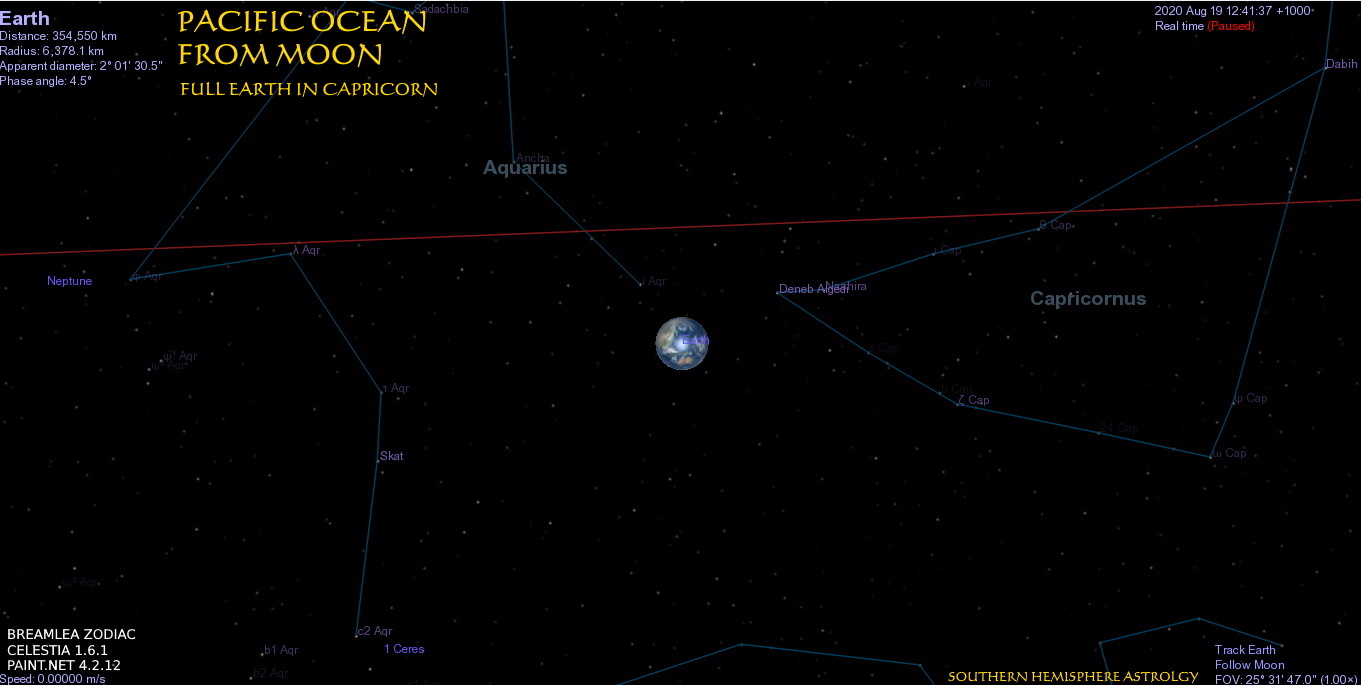
Some time between the Stone Age and the Bronze Age, while the peoples of the Mediterranean were cobbling together myth and asterism and time as eventual attributes of a religion of connection, the tradition grew that a small triangle of rather dim stars a little more than a handspan east of the Milky Way resembled a goat, and as Capricorn (Goat Horn), it was the right place for the Sea-Goat to inhabit, eternally watching over the children destiny doomed him to lose.
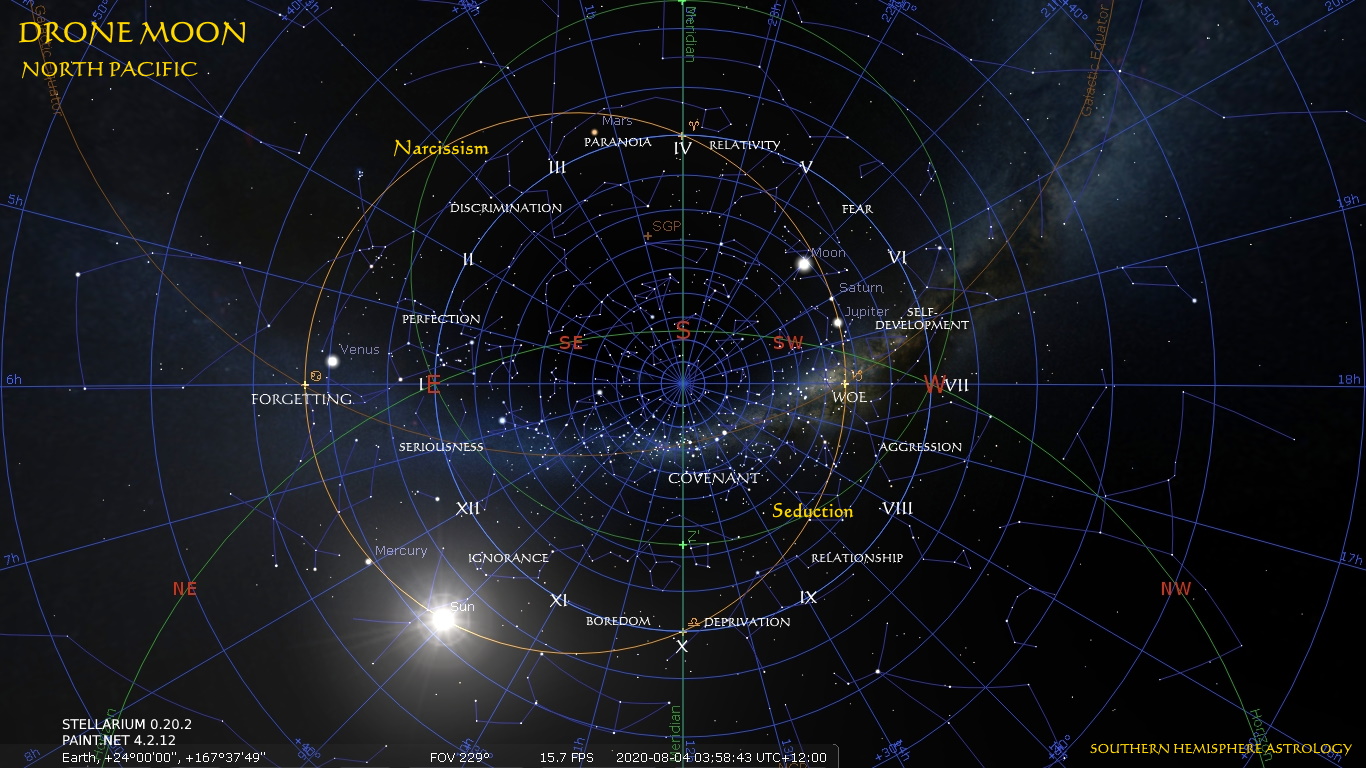
By now, the Moon is aware of being meat in the sandwich of science and superstition, and by increasingly presenting his own perspective, is attempting progressively to emancipate himself from the prejudices and preoccupations of earthly folk-history. Nevertheless, he cannot evade the path to meaning indicated for him by the witches’ hats of the Sun-goddess, despite the senseless complexity of their pattern—she is primarily responsible for magnifying the Sea-Goat’s loss by uncoupling his constellation from the seasons, and reducing him to undeserving obscurity. It is beyond belief that the Moon might ever evolve back into a rock, so how does the Drone know when to fly, and in what direction? He follows human practice, of course, and devotes himself to his Thou!
No wonder the Drone is so seldom successful in finding a subject for his devotion!
But wait! Driven by loss, the Drone will inevitably find the Vertex in the Eighth House, even should the wind-blown recipient of his devotion there have no hope of perpetuating her hive. Here it is, in the middle of the ocean, and neither seasons nor Milky Way could guide him, only the mythical cry of the Sea-Goat.
Are-you-there-for-me? It is an interesting question—at a very busy intersection of hotly contested terms which endanger the life of anyone crossing against the lights—which is answered in the affirmative, not without trepidation, and in a voice barely audible and without echo, by the Drone.
“Hence, the world-machine will have its center everywhere and its circumference nowhere, so to speak; for God, who is everywhere and nowhere, is its circumference and center.” Nicholas of Cusa, De Docta Ignorantia, II, 12, Trans. J. Hopkins.
“For the geometer all movement is relative: which signifies only, in our view, that none of our mathematical symbols can express the fact that it is the moving body which is in motion rather than the axes or the points to which it is referred.” Henri Bergson, Matter and Memory, trans. Nancy Margaret Paul and W. Scott Palmer, Dover Philosophical Classics, 2004, p.255.
“Our self-consciousness does not take place in a merely closed-up, windowless self. It consists in the fact that the self, by transcending itself, faces and expresses the world. When we are self-conscious, we are already self-transcending.” Nishida Kitaro, Last Writings: Nothingness and the Religious Worldview, trans. David A. Dilworth, University of Hawaii Press, 1993 edition, p52-53.
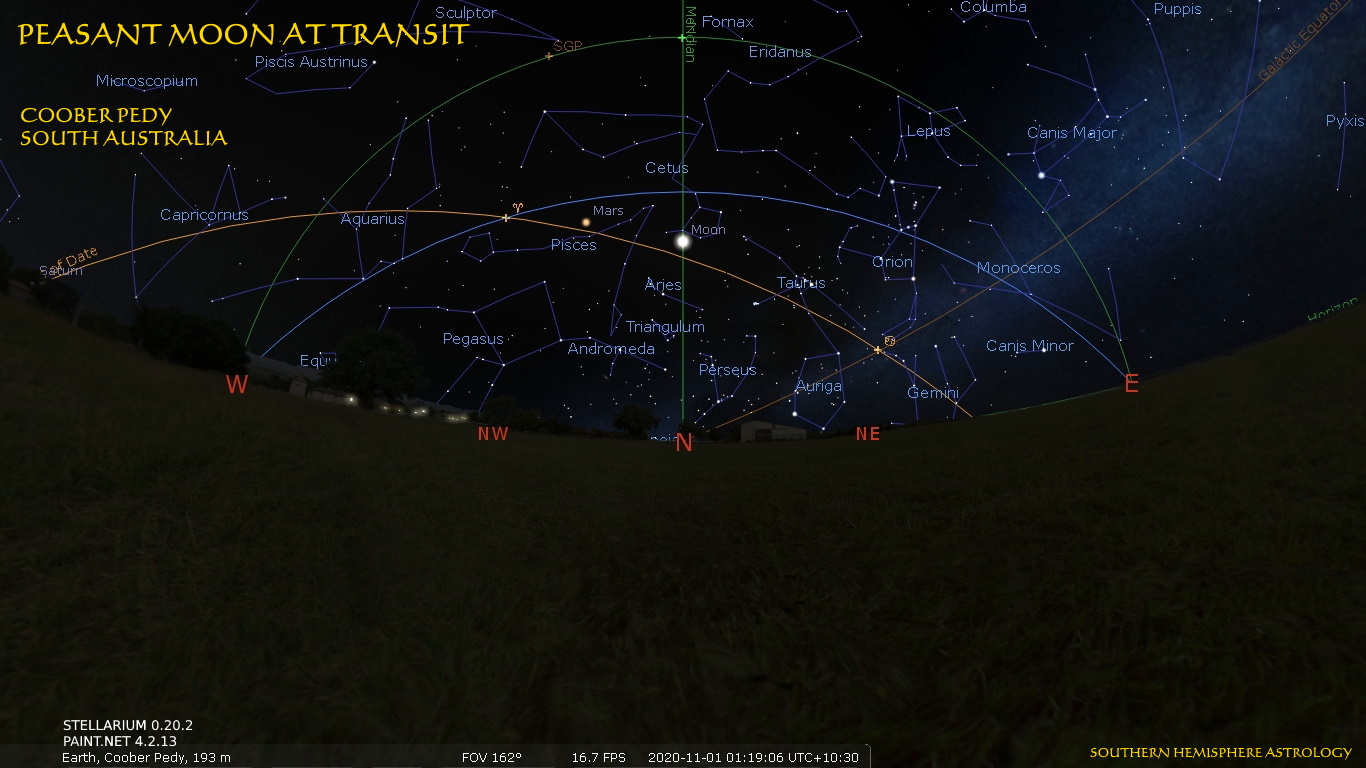
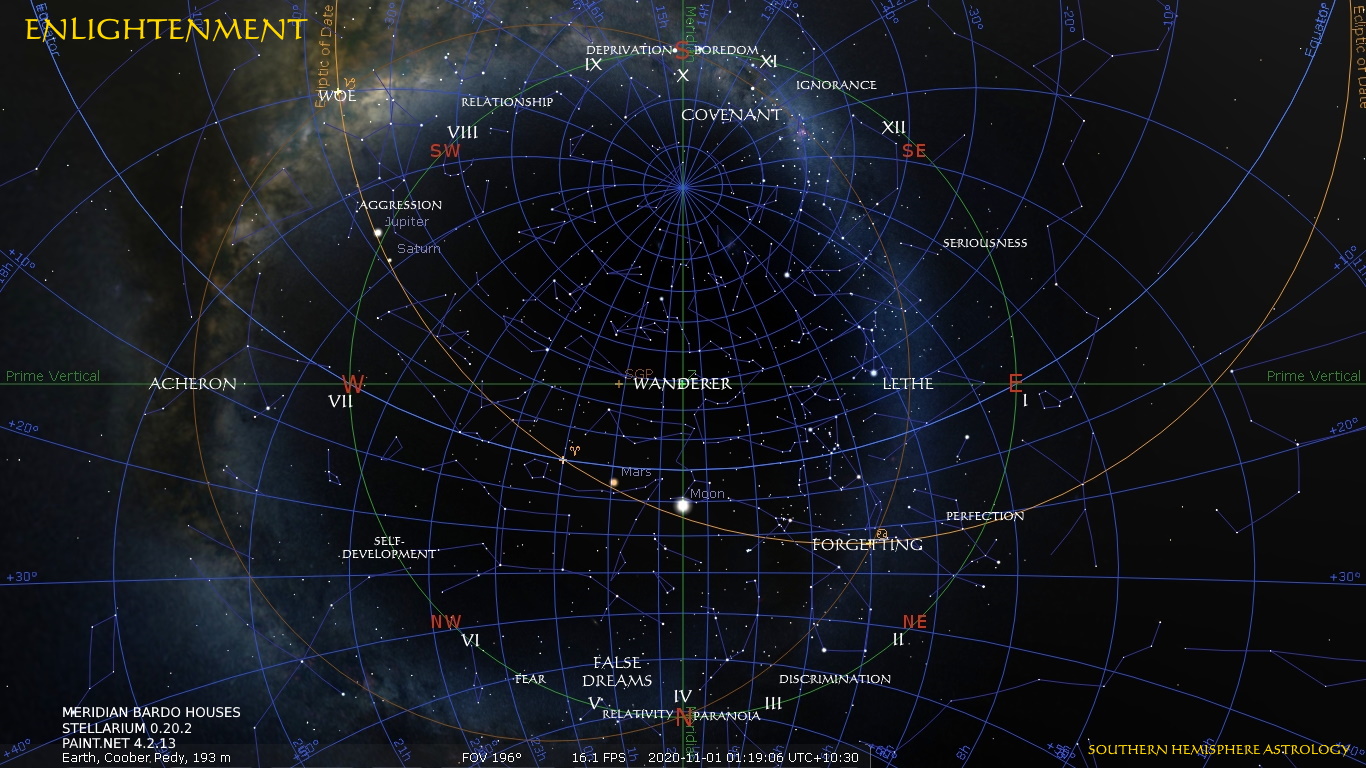
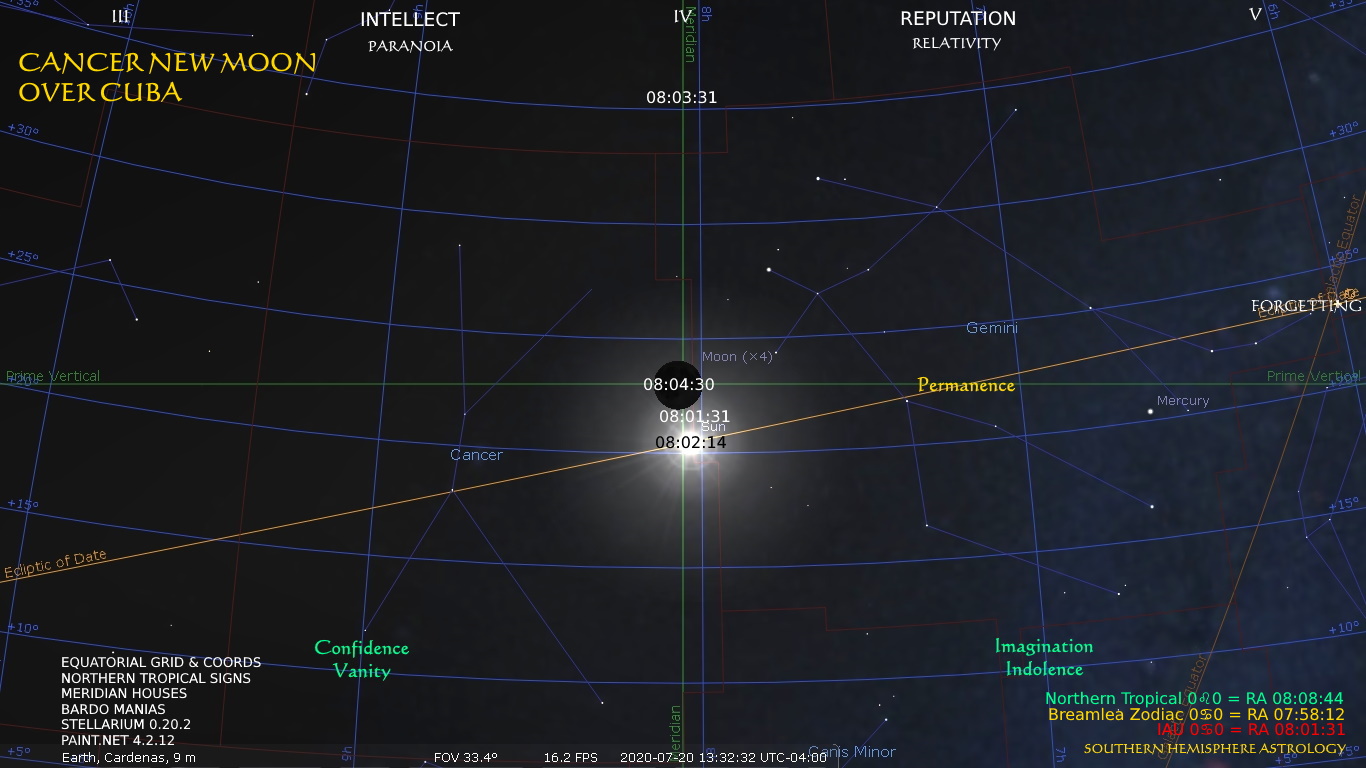
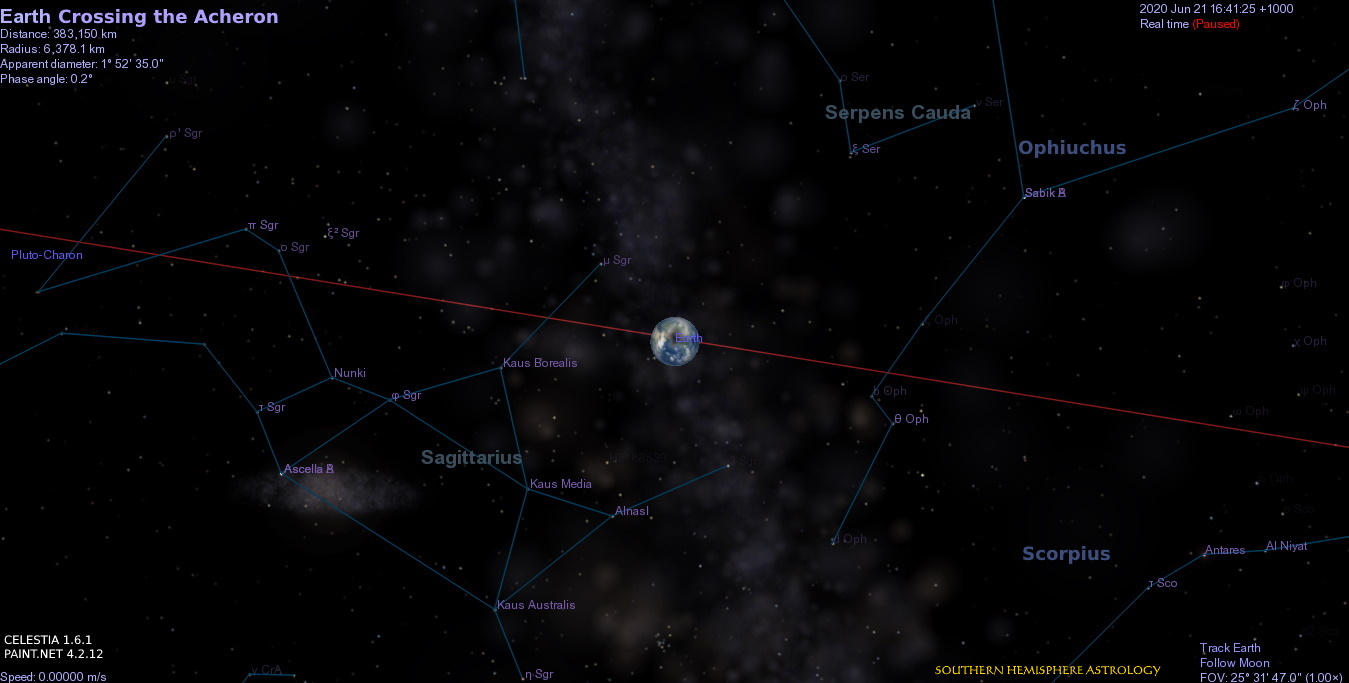
With the Sun now beyond the Lethe behind him, and the Acheron curling like smoke above the Earth’s shoulder, the Moon begins another lap in Cancer, which nobody—neither the Divine Geometer of the Northern Temperate seasons nor the IAU geometers of contorting 19th Century Constellation boundaries—will deny, for they’re a jolly good fellow, and so say all of us!
‘Everything is connected to everything else’ is a truism ubiquitous at every level in our highly specialized and compartmentalized, not to say fractured, societies, and might well be an unconscious saboteur of its nemesis, social distancing. How is it influencing many to modify their behaviour for the sake of others, and seducing some to refuse to do so? It is clear that some people forget themselves, and others forget everyone else.
The post-COVID duration may overcome cynicism towards the life-expectancy of the aged, and panic concerning the career prospects of the young, settling into a new normal, but I have the uncomfortable feeling that a new normality will resemble the world I was born into, saturated by post-war earnestness, and a dreadful commitment to the finite and personal, so indifferently wounded by the historical, by ideologies and moralities which had so recently thrown their young and innocent recklessly and traumatically at each other.
It may be that Gaia has been groping for this coronavirus for a long time, as long as upheaval has been sucking tectonic plates together. Perhaps we have now had our turn and been outplayed. It may be that the rule changes which kept legends playing into old age stupefied the crowds into disaffection, and somebody playing Apocalypse did something accidentally on purpose. Perhaps the therapy-mongers who made fallow the fields of narcissism were right: we should have worked through skin hunger long ago.
Something must be remembered into being for the first time, intuiting the imperatives which the world awaits from us, who are its creation, not inferring them into the Jacobin templates of demolished order. The roads everyone must use never mend.
“After all, what is identity but the slow, lifelong accretion of gazes: us looking at ourselves being looked at by others? What we see is, largely, what they see, or what we think they see. And when they turn away, when we become unseen, in a way we cease to be.” Elitsa Dermendzhiyska.
“Thus conscience does make cowards of us all; And thus the native hue of resolution Is sicklied o’er with the pale cast of thought; And enterprises of great pith and moment, With this regard, their currents turn awry, And lose the name of action.” Hamlet, III, i.
“He who fights with monsters should be careful lest he thereby become a monster. And if thou gaze long into an abyss, the abyss will also gaze into thee.” Nietzsche, Beyond Good And Evil, IV, §146, trans. Helen Zimmern.
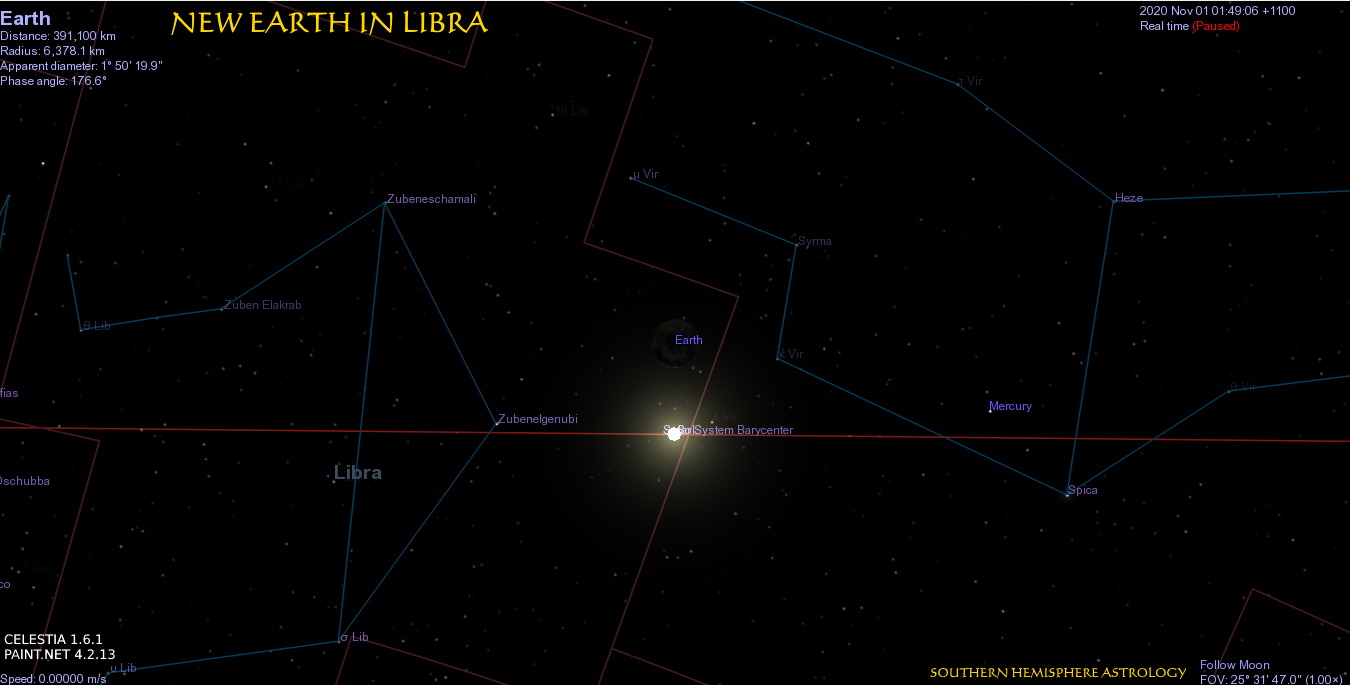
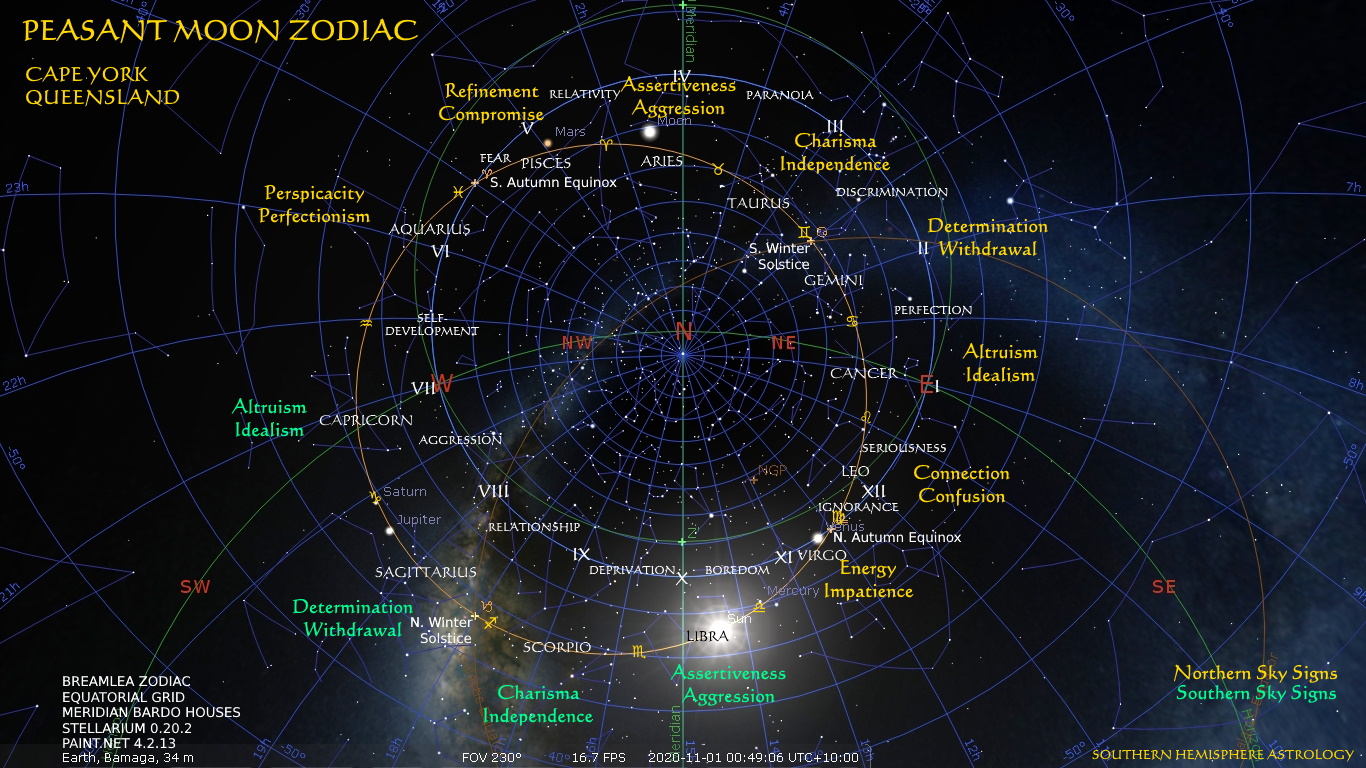
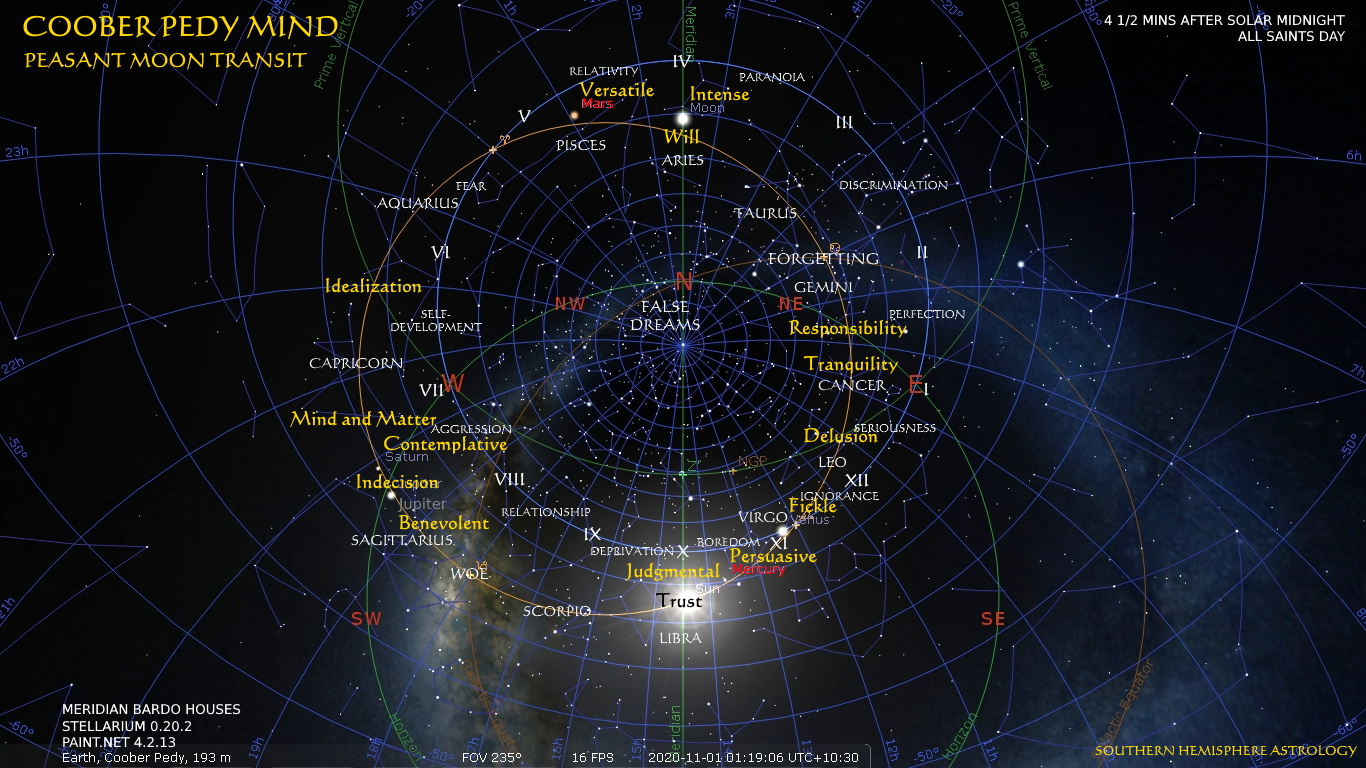
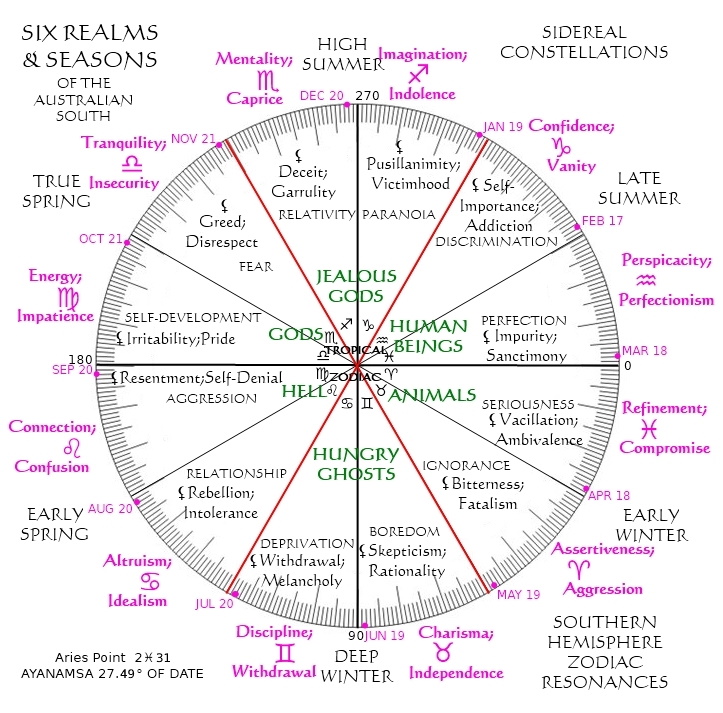
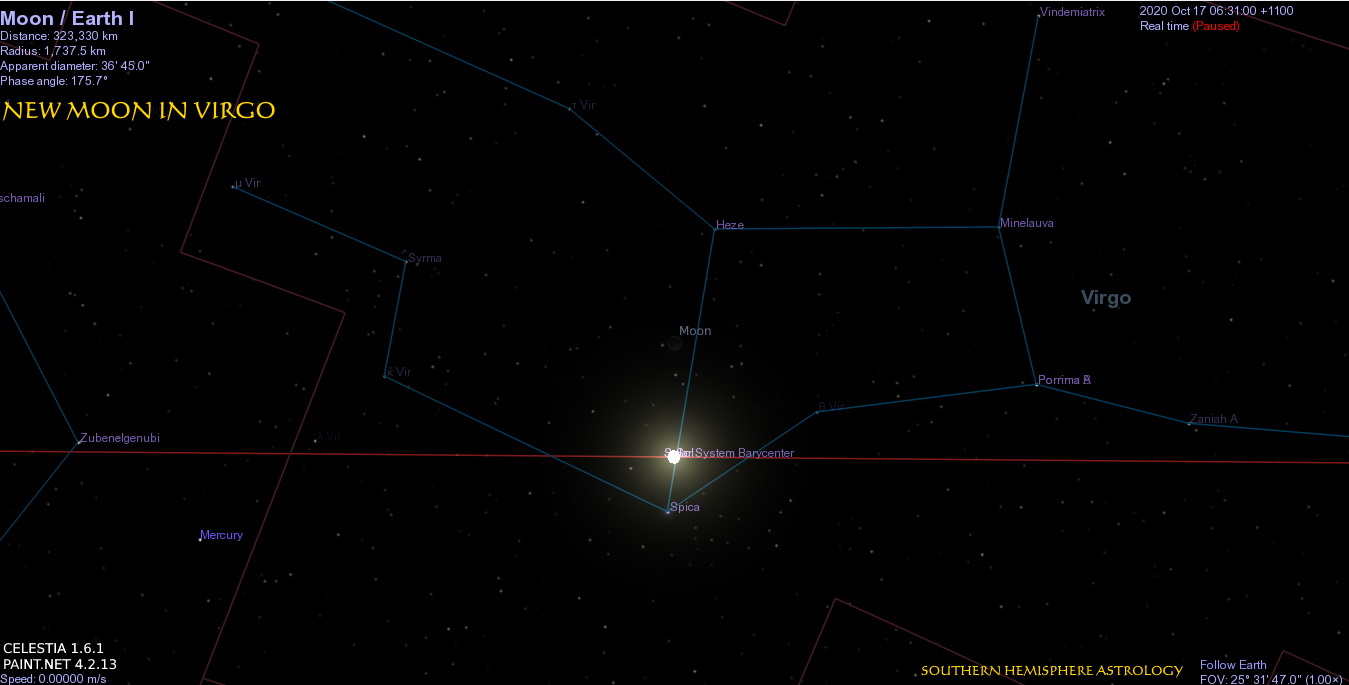
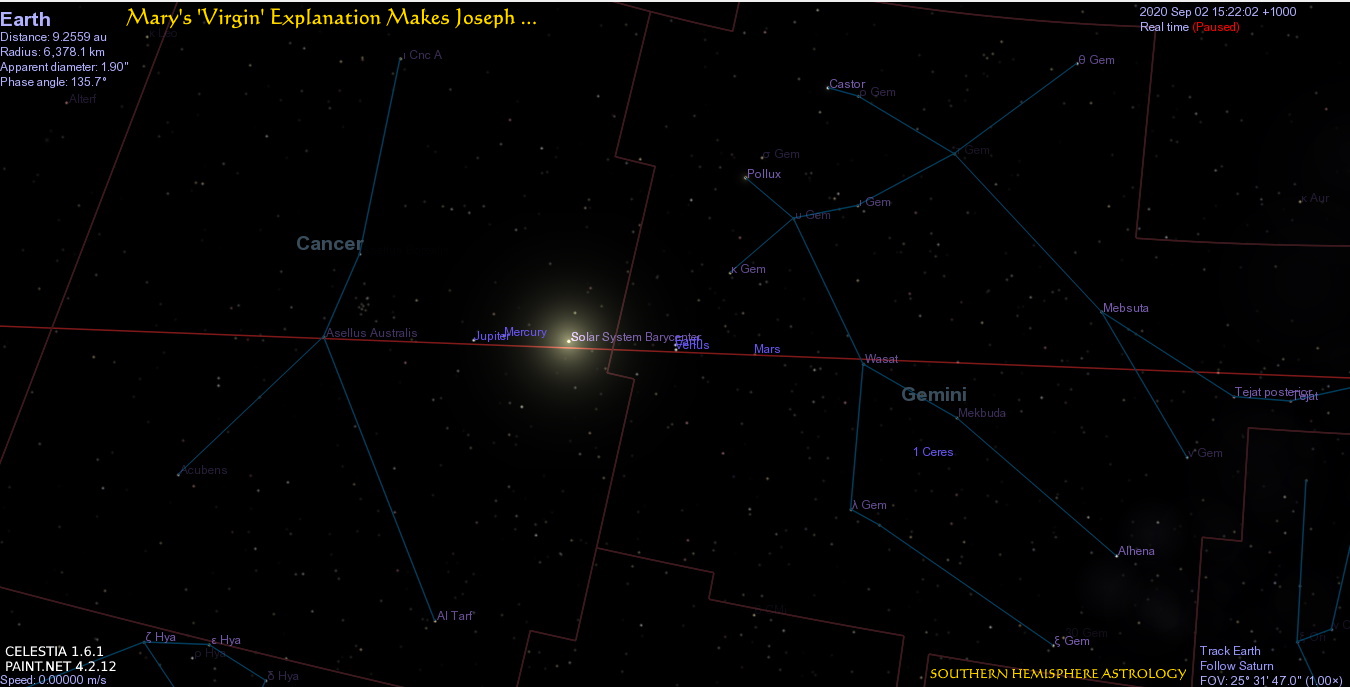
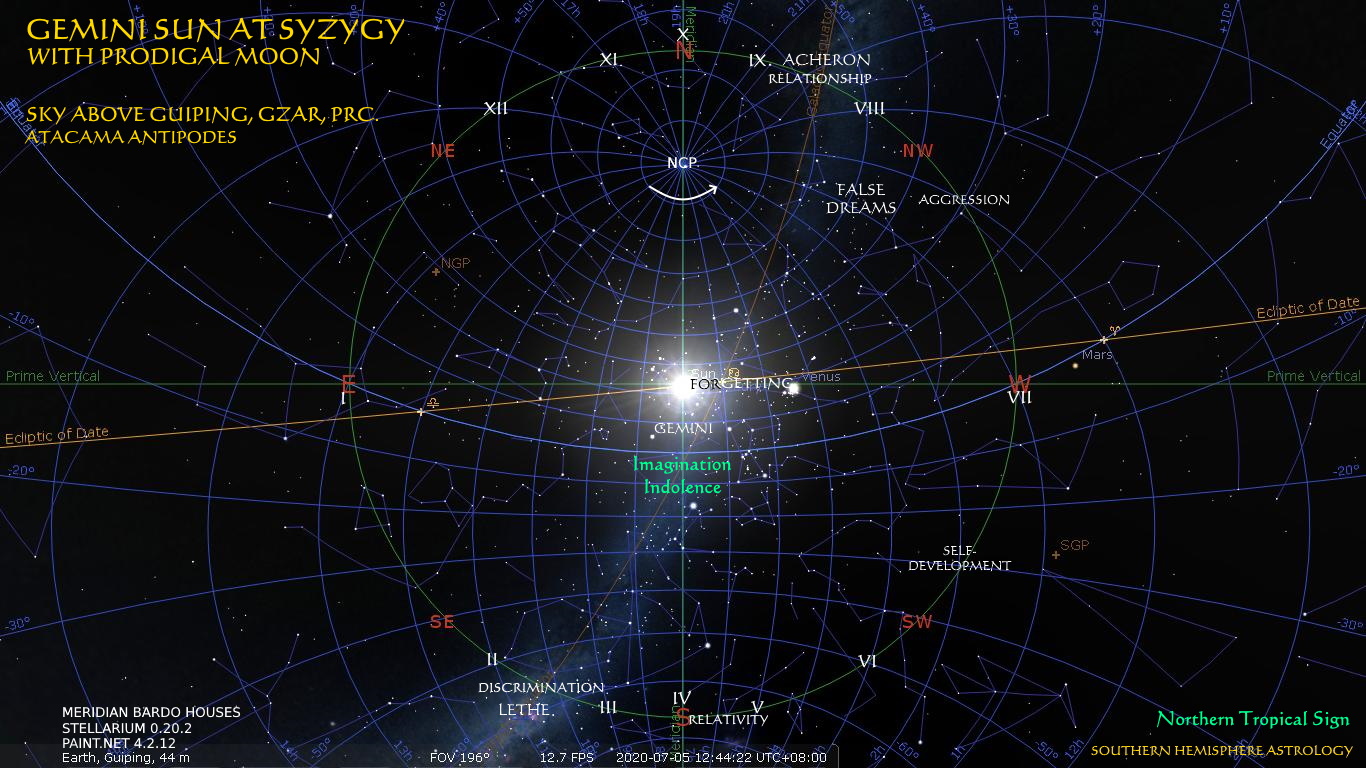
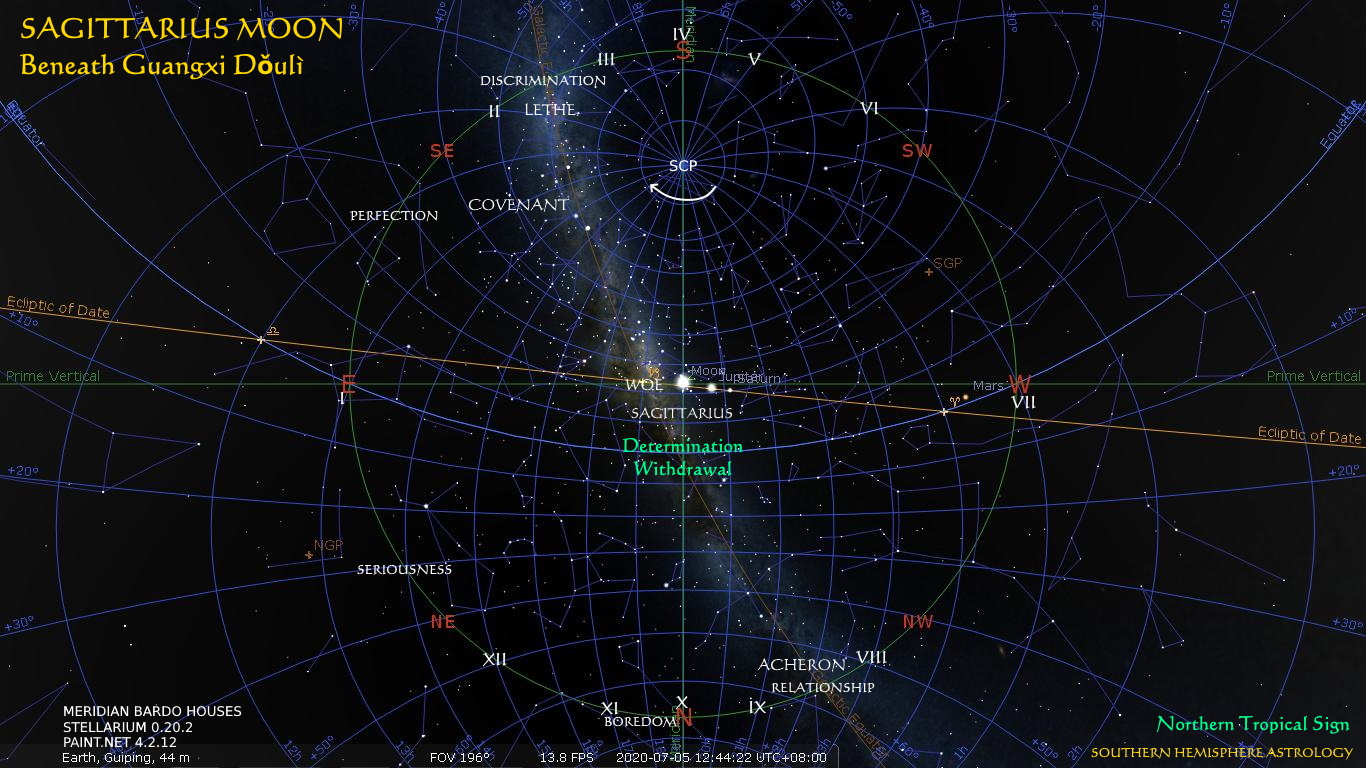
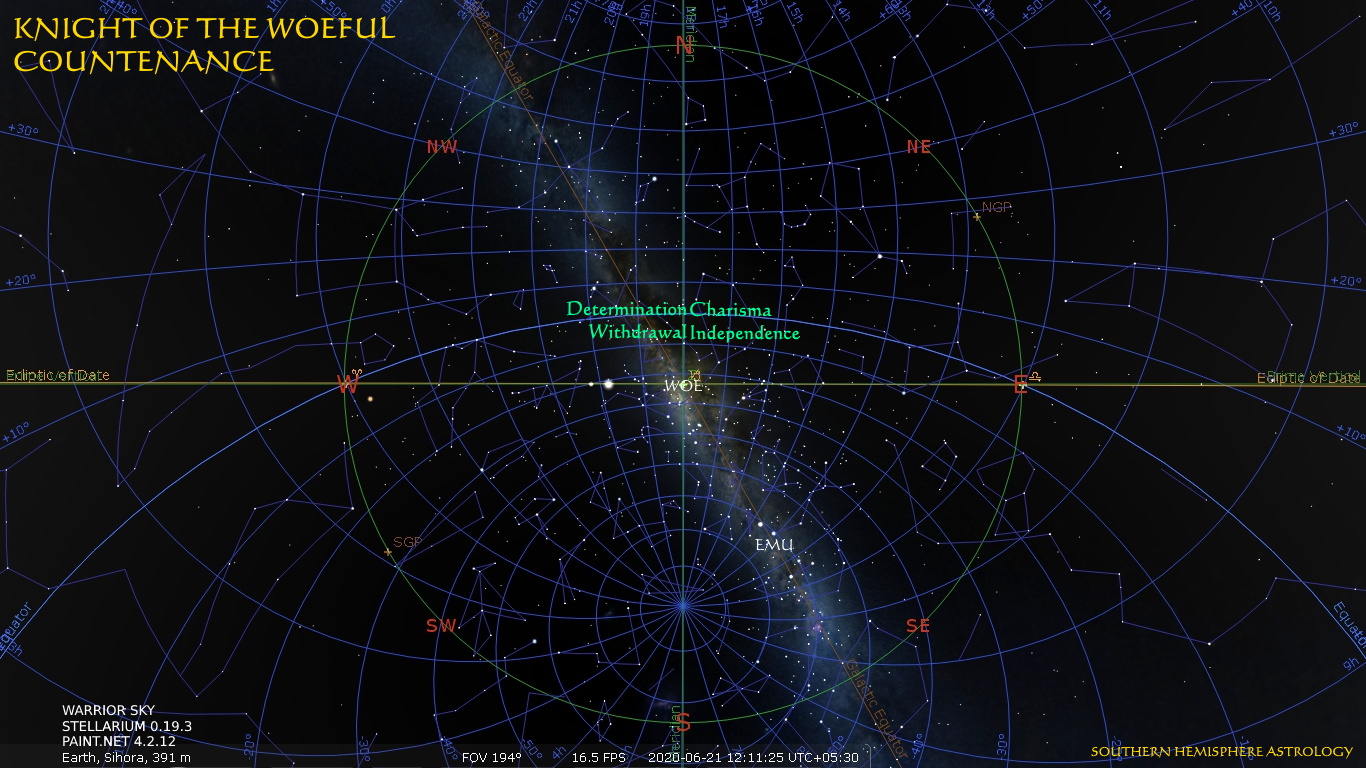
That the Sun is in the Constellation Gemini, the Northern Sign Cancer and the Southern Sign Capricorn is of interest, but not arrestingly so. Nor is it of vital concern whether the primal force of earthly existence is female or male—we choose whichever we like—although it has amused us to plot the rhythm of the Moon’s phases as locked in a striving to escape a primordial envy of female power. It is the dynamism of Opposition which now resonates with the strongest signal, not only because the Signs and genders of Sun and Moon are interchangeable at Opposition, but because of the influence we have imputed to the Milky Way and the crossing of its rivers of the Underworld.
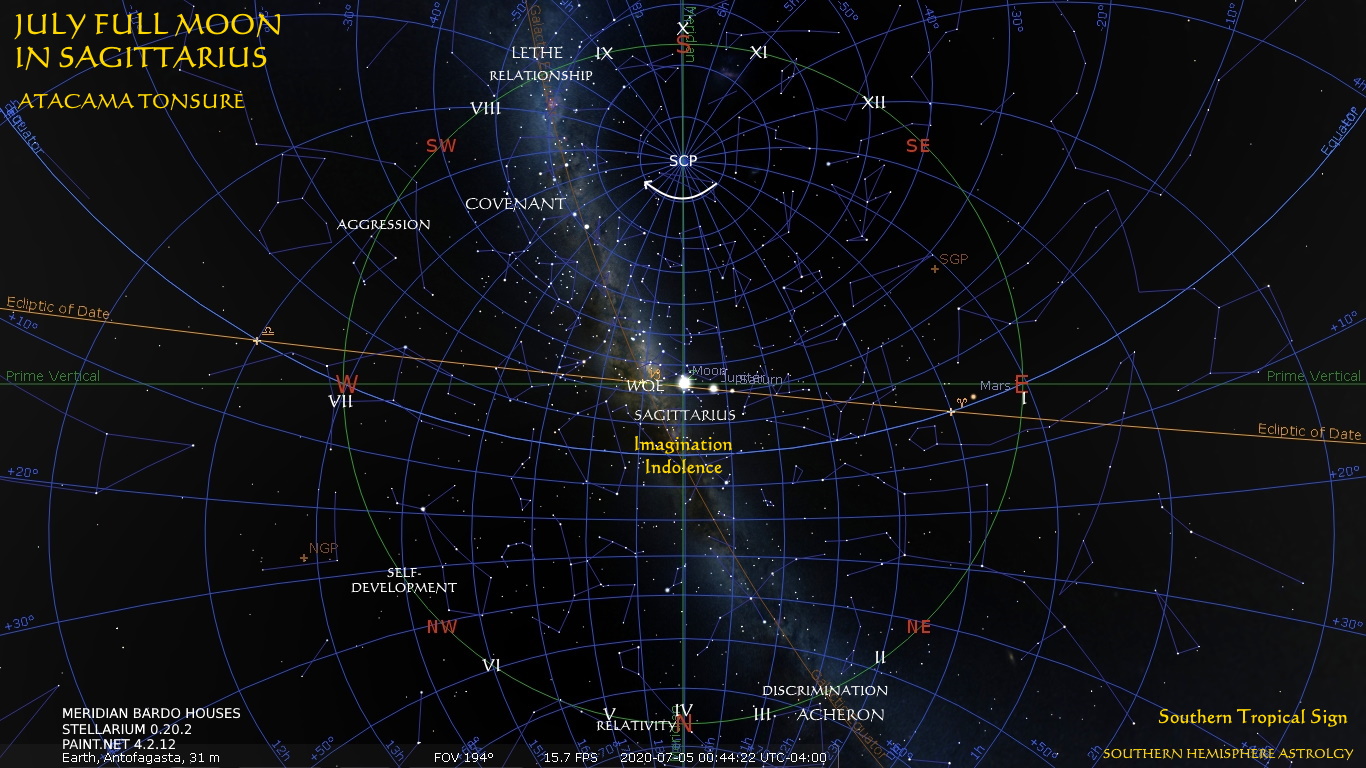
From the Lethe we dry off our responsibility; from responsibility we clothe care; care gives rise to anxiety; from anxiety comes being-toward-death in the effort to maintain buoyancy, the meaning of who we might be, as we flail across the Acheron to do quixotic battle with the denial of authenticity. And this drama is projected into the heavens above and below. Yes, we are made of water; yes, we go to water. The Full Moon of Sagittarius is hidden in the sack of the Sun and Earth in Gemini as a sublimated knot of anger and hurt, a recurrent nightmare, a hard-wired secret, an unexpiated unkindness, a solvent of lust and revenge: the germinating seed of an Elm rattling to be festooned with False Dreams at the gates of Utopia.
Do you identify with Gemini for some reason? Have you ever been recognized as a ‘Gemini’? Do you in fact resemble it? Or have you never seen it? It is visible in the night sky between its heliacal rising in September and setting in May, at the nightfall meridian in March. And it really does look like a pair of twins, or two buddies of either gender or both, or two sides of the same coin, Sun and Moon, North and South, like being a self, and knowing the law, daring and caution, day and night, anima and animus.
Validation, the ghost which haunts the faces of yesterday’s somebodies, reverberates like the reflected reflection of the existential enquiry, ‘What happened?’ You may well have accustomed yourself to the belief that you surpassed your parents, but you know that the back of your head indicates that you need a haircut, and has not surpassed the emperor’s or the prophet’s. Is it possible that lighting merely shaded your followers, your students, even your children? And does the improbably grotesque approbation of the satyr, somewhere between the comic and the tragic, emulate Gemini’s humanity, or merely notch the animal shaft it saves for perfection?
I have dreamed thee too long, Never seen thee or touched thee. But known thee with all of my heart. Half a prayer, half a song, Thou hast always been with me, Though we have been always apart.
From “Dulcinea”, Man Of La Mancha, Wasserman, Leigh & Darion.
If there is one injunction we don’t need in the maw of pestilence, it is, ‘Get serious’, for the meaning of life is no longer a buffoon’s number but a lack, a very disconcerting lack, lingering amongst the precious things we always took for granted and may never have again, like a tender embrace, an infant’s confided insight, the soaring spirit of an orchestra, and a blush on the cheeks of numbness.
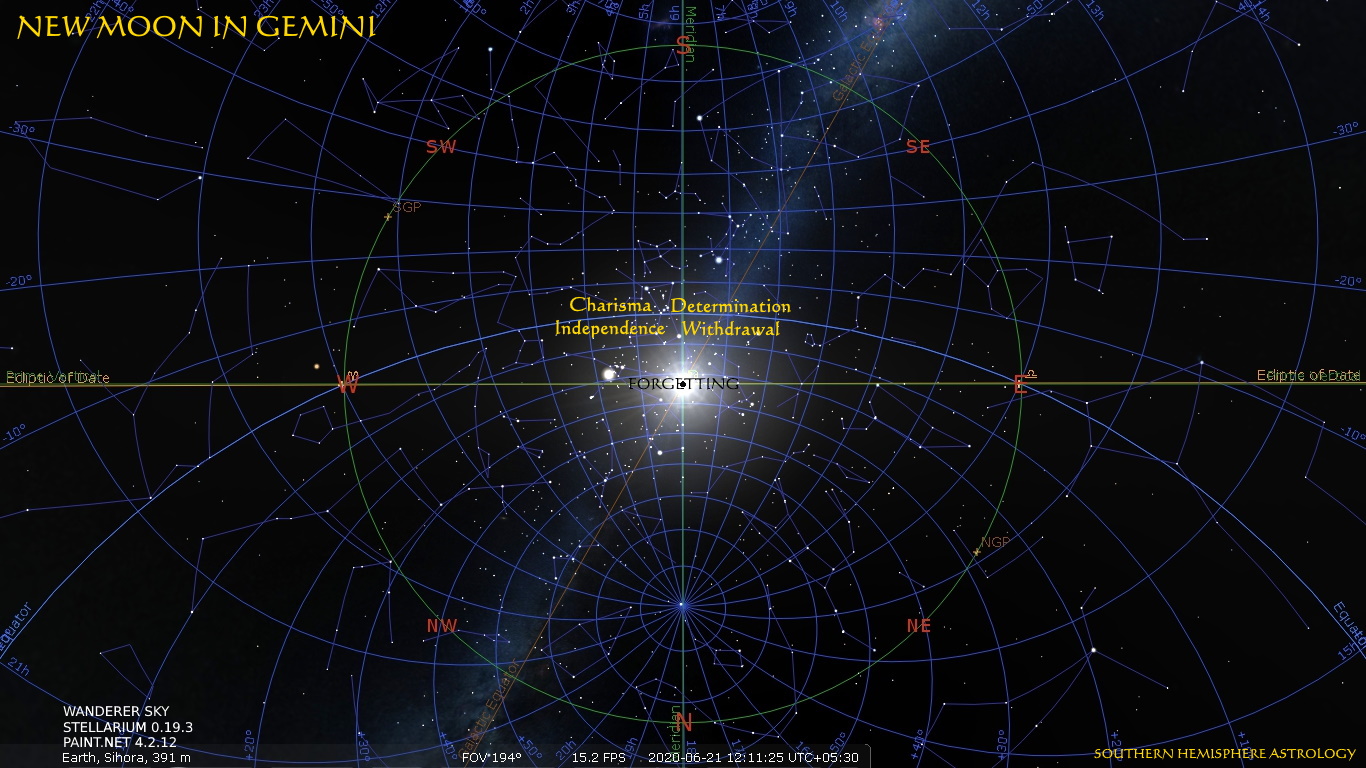
Yes, every nineteen years of our lifetime, 1925, 1944, 1963, 1982, 2001, and right now, the New Moon has joined with the Sun at June Solstice to cross the Lethe, where exhausted extremism loses itself and we can rebuild country—the village that un-cancels, rescues and raises the child—as sanctuary, in Schiller’s immortal words from the Ode To Joy:
“Freude, schöner Götterfunken Tochter aus Elysium, Wir betreten feuertrunken, Himmlische, dein Heiligtum!”
The attributes of the stars, the configurations of your unconscious inheritance, the paleolithic sky, and the evolution of the idea of ‘space’ beyond representations of zodiac and underworld, are the sidings and stations your journey has passed through in your dreams, in the middle of the night, where sanctuary is eternally denied the enclosed heart:
“Whoever has succeeded in the great attempt, To be a friend’s friend, Whoever has won a lovely woman, Add his to the jubilation! Yes, and also whoever has just one soul To call his own in this world! And he who never managed it should slink Weeping from this union!” Schiller.
When you notice from your window the rows of plantings which radiate in all directions in perfectly straight lines, I know you don’t know how it was done, but do you wonder if there is a station around here you might get a ticket back to one day? So many stations on the Mindfulness Line! Perhaps it is senseless to conjecture attributes for the stars. Perhaps journeys are hallucinations, or absent-mindedly drumming fingers on a pin-striped knee, resonating on a commute like the reverse motion of a picket fence.
Onward, across the Lethe! You may not see eye to eye with Heidegger, but I think we can all agree that responsibility is a pretty basic step forward to remembering oneself. As they say, there’s no time like the present. Is there, Aldonza?










 Southern Hemisphere Astrology